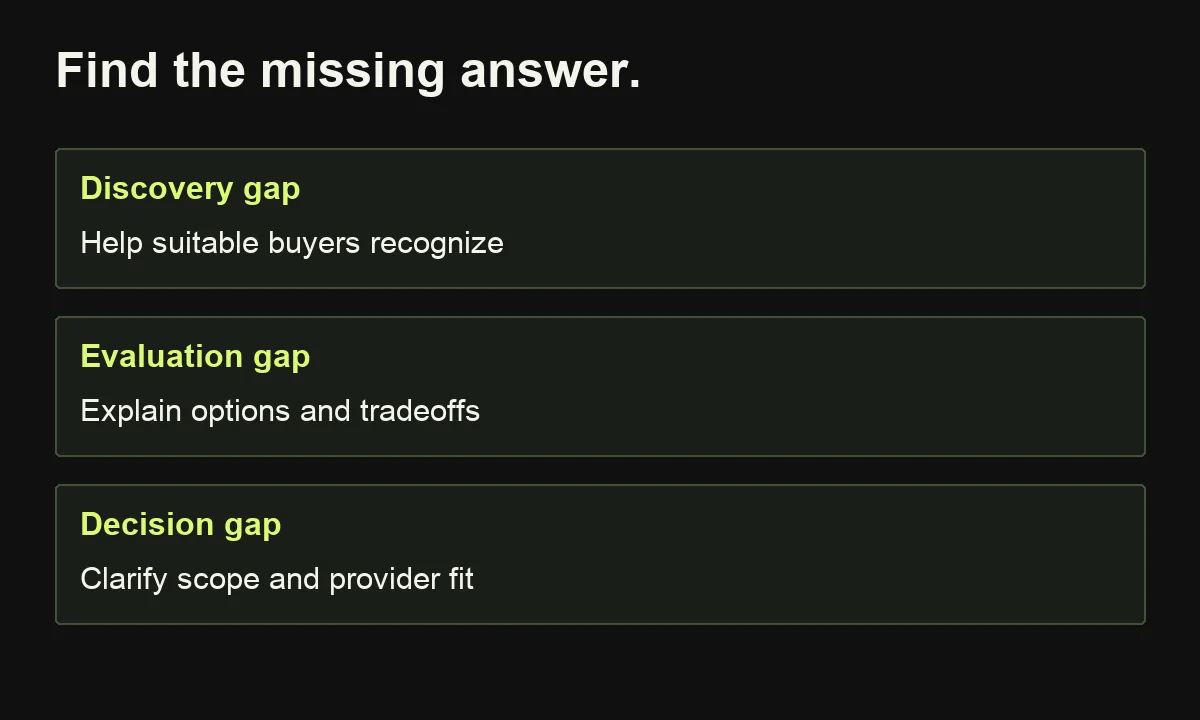
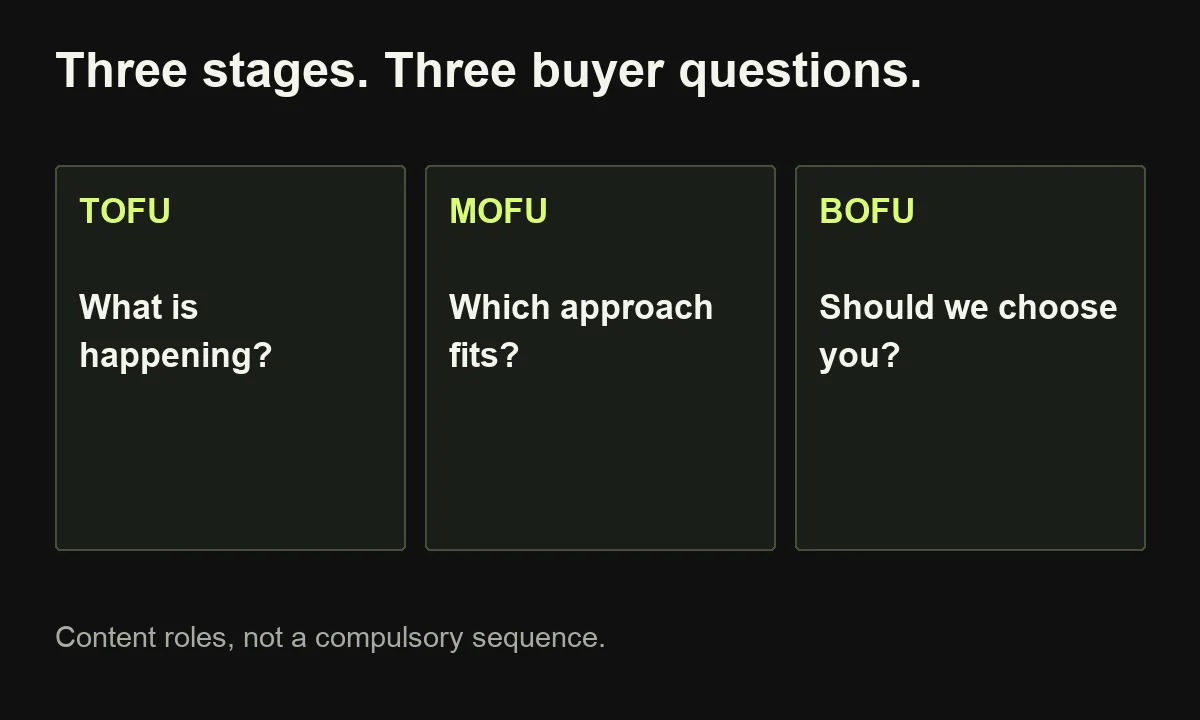
TOFU, MOFU and BOFU mean top, middle and bottom of the marketing funnel. TOFU helps buyers recognize a problem. MOFU helps them evaluate possible solutions. BOFU helps them decide whether to choose a particular provider. The framework is useful for planning content, but it does not describe a compulsory sequence.
A company publishes helpful articles. Readers arrive. Some subscribe. Yet sales keeps hearing questions the website never answers: What does implementation involve? Why choose this approach? What would working together actually cost?
The problem may be the content mix. Plenty of explanation, little evaluation, almost no decision support.
HubSpot's B2B funnel guide uses awareness, consideration and decision to explain these stages. Those labels give teams a shared vocabulary. They become more useful when translated into specific buyer questions.
My starting point is straightforward: classify content by the uncertainty it resolves, rather than the format it uses. A blog can support a purchase decision. A case study can explain a problem. A webinar can do either.
This guide is written for B2B founders and marketing teams planning content around a service or complex product. The examples use a hypothetical content workflow consultancy; they are illustrations, not client results.
You will learn what each stage means, how to connect the stages, and how to diagnose gaps. The aim is a content system that helps the right people make better decisions, including deciding that your offer is not suitable.
What is TOFU content?
TOFU content helps someone understand a problem, opportunity or category before they evaluate specific suppliers. Its immediate job is useful recognition: identifying what is happening, why it matters, and whether it deserves attention. Strong TOFU content remains relevant to the problems your business can credibly help solve.
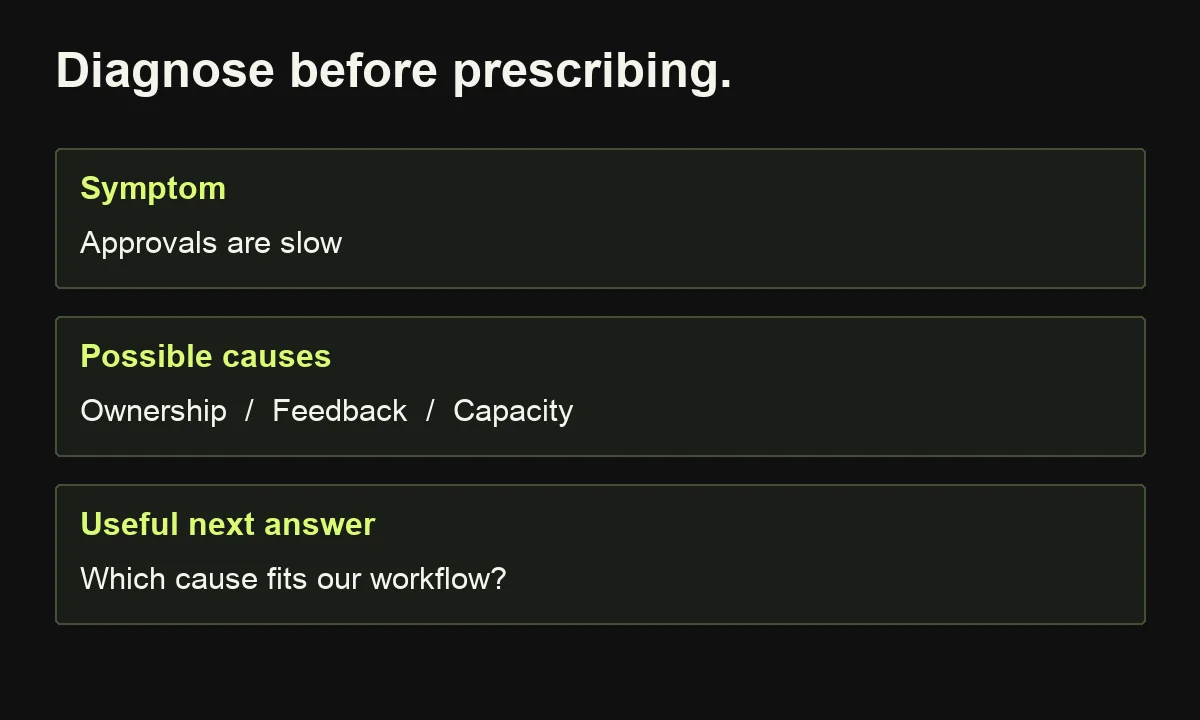
For the hypothetical consultancy, a TOFU article could answer: “Why do content approvals take so long?” It might distinguish unclear ownership, conflicting feedback and overloaded reviewers. The reader should leave with a more precise diagnosis than “our team needs to write faster.”
Useful formats include explanatory articles, problem checklists, research summaries and educational videos. Choose the format that makes the explanation easiest to understand; a format alone does not establish the stage.
The commercial discipline is relevance without premature selling. An agency serving enterprise cybersecurity teams should think carefully before pursuing a broad “what is marketing?” query. Large traffic numbers are unhelpful if the audience rarely encounters the problems the agency solves.
A suitable next step might be a workflow checklist, an explanation of alternative solutions, or a related guide. Offer a consultation where appropriate, but do not make it the only way to learn more.
Before commissioning TOFU content, ask: Which buyer should recognize themselves here? What observation will help them? What do we know that makes our explanation useful?
If you cannot answer those questions, you have a topic. You do not yet have a content brief.
What is MOFU content?
MOFU content helps buyers compare approaches after they recognize a problem. It explains options, tradeoffs, requirements and relevant evidence. Its job is to improve evaluation, not simply collect an email address. A useful MOFU asset helps someone judge which solution makes sense under their own constraints.
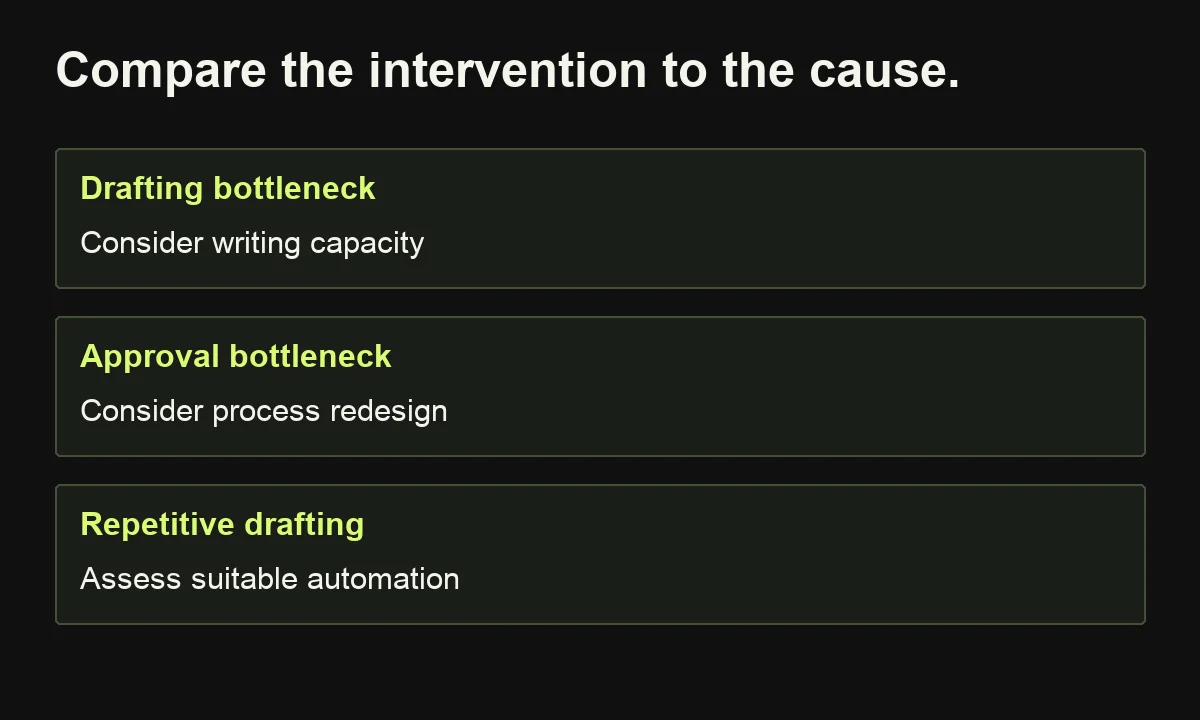
Our consultancy might publish “Hire a writer, redesign approvals, or automate drafting?” The answer should distinguish three different bottlenecks. More writing capacity cannot resolve contradictory feedback. Automation cannot decide who has final approval authority.
This is where strategic content earns its value: it makes the comparison more accurate.
A useful comparison identifies when each option fits, what it requires, where it fails, and which questions remain unresolved. Avoid pretending your offer wins every scenario. A small team with occasional drafting needs may need a freelance writer rather than a workflow engagement.
MOFU content can include selection guides, comparison articles, diagnostic worksheets and process walkthroughs. A case study belongs here when it helps readers assess an approach; its role depends on what it actually demonstrates.
Evidence should match the recommendation. If you claim a method improves review quality, a project about reducing drafting time is insufficient support. Explain the difference instead of borrowing the project's strongest result.
The next step could be examining a relevant project, reviewing engagement scope, or completing a diagnostic. Give the reader enough detail to assess fit before requiring a conversation.
Good MOFU content helps buyers eliminate unsuitable options as well as shortlist suitable ones.
What is BOFU content?
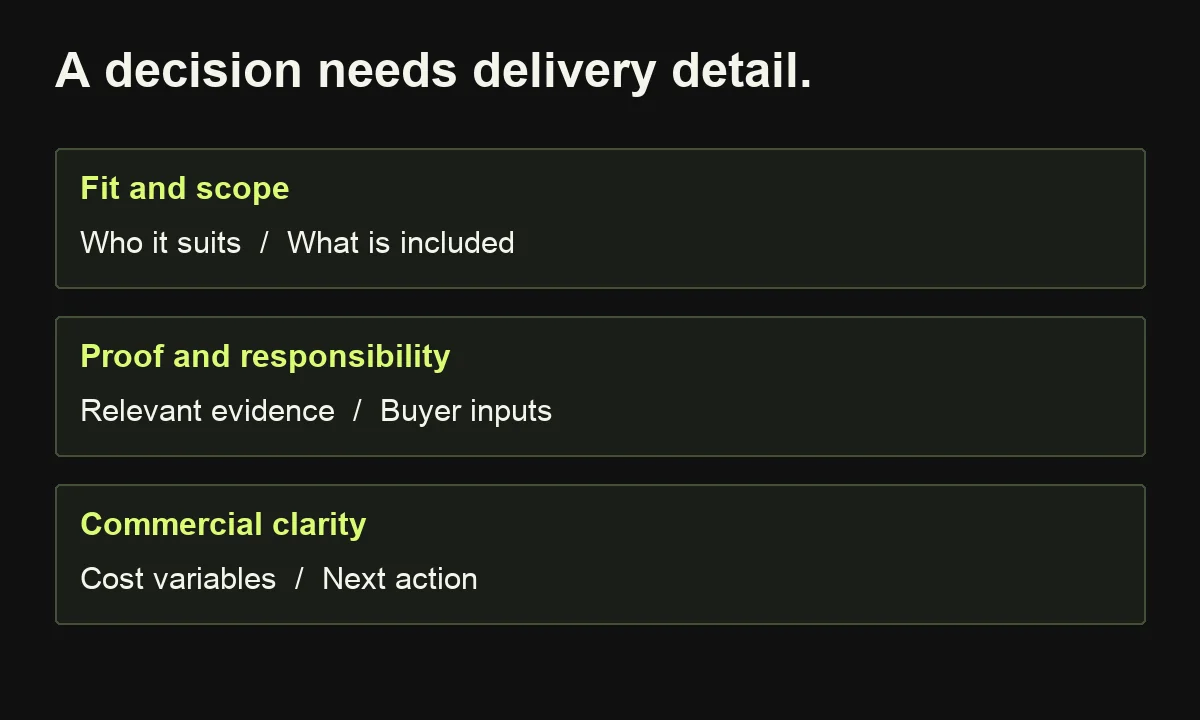
BOFU content helps someone assess a particular provider or offer and resolve the risks of proceeding. It should clarify fit, scope, cost, responsibilities, evidence and the next action. Its purpose is an informed decision, which may be a purchase, a qualified enquiry, or a decision not to proceed.
For a consultancy, the important asset might be a detailed service page. For software, it could be a pricing page, product demonstration or implementation guide. The page needs to answer questions specific to the offer rather than repeat broad category benefits.
Explain what is included, what is excluded, who the work suits, and what the buyer must provide. If pricing depends on scope, identify the variables and how a quote is produced. Do not hide every commercial detail behind “book a call.”
Proof should be inspectable: project context, the work performed, observed outcomes, and limitations. Testimonials support credibility, but they cannot substitute for an explanation of delivery.
BOFU is also about reducing the risk of a bad fit. State when you would recommend another approach. A buyer who lacks the necessary internal owner should know that before signing an engagement.
Use a clear next step: request a scoped discussion, share a brief, or view a relevant demonstration. Explain what follows and what preparation is useful.
Remove avoidable friction from contact forms. Ask for information needed to respond intelligently, and make confirmation reliable. A submission should not leave the visitor wondering whether their enquiry arrived.
How do TOFU, MOFU and BOFU work together?
The stages work together when each asset resolves one uncertainty and provides a relevant route to the next answer. They do not require every reader to start with awareness content. Someone may arrive through a recommendation, land directly on a service page, or return to an explanation during supplier evaluation.
Gartner's buyer-enablement research describes B2B purchasing as a set of often-revisited tasks rather than a linear path. That is a useful boundary for the funnel: it organizes your content, but should not dictate the buyer's behavior.
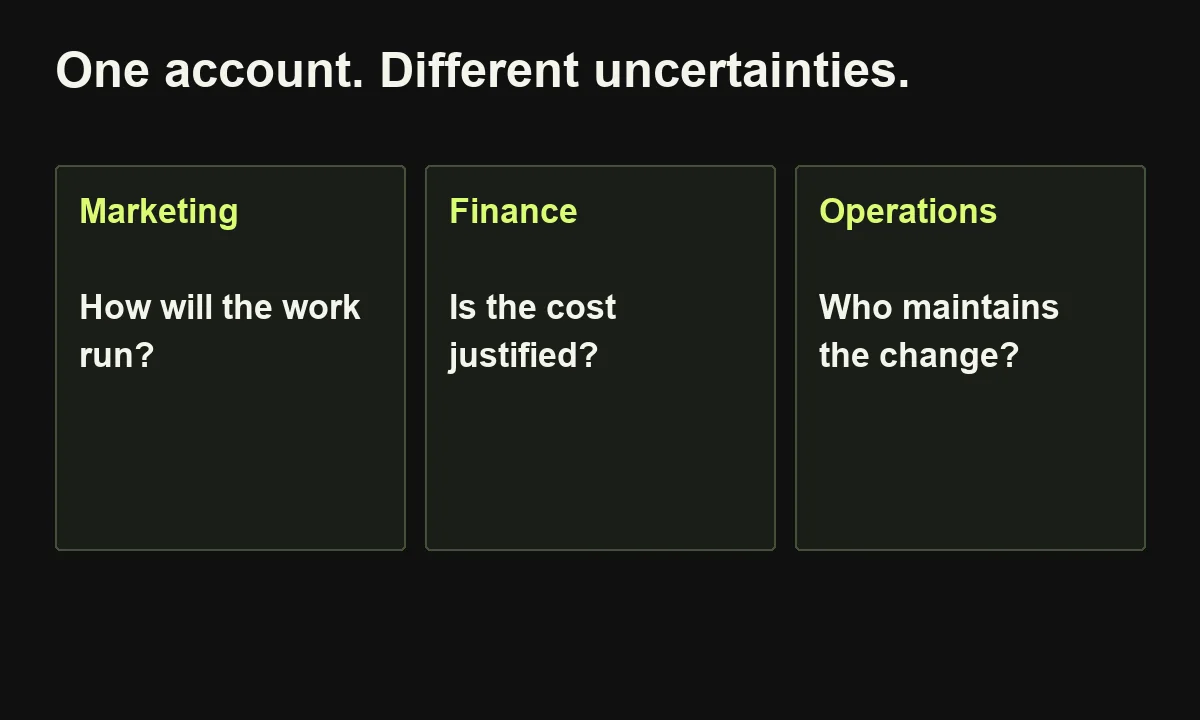
Consider one hypothetical buying group. The marketing lead understands the bottleneck and wants a proposal. Finance needs to understand the cost of delay. An operational manager wants to know who will maintain the new workflow.
Calling the entire account “BOFU” does not make those different questions disappear.
Give a champion material they can share internally: an explanation of the problem, an options comparison, and a scope summary. Each stakeholder should be able to understand an asset without reading your entire library first.
Internal links should follow these questions. An approval-delay article can link to a diagnostic; that diagnostic can link to a relevant project and service scope. The service page can link back to the explanation.
My guide to connecting blogs, case studies and services explains how to map those relationships. Link where an answer is needed, not merely where a keyword appears.
Use the Decision–Evidence–Next step framework
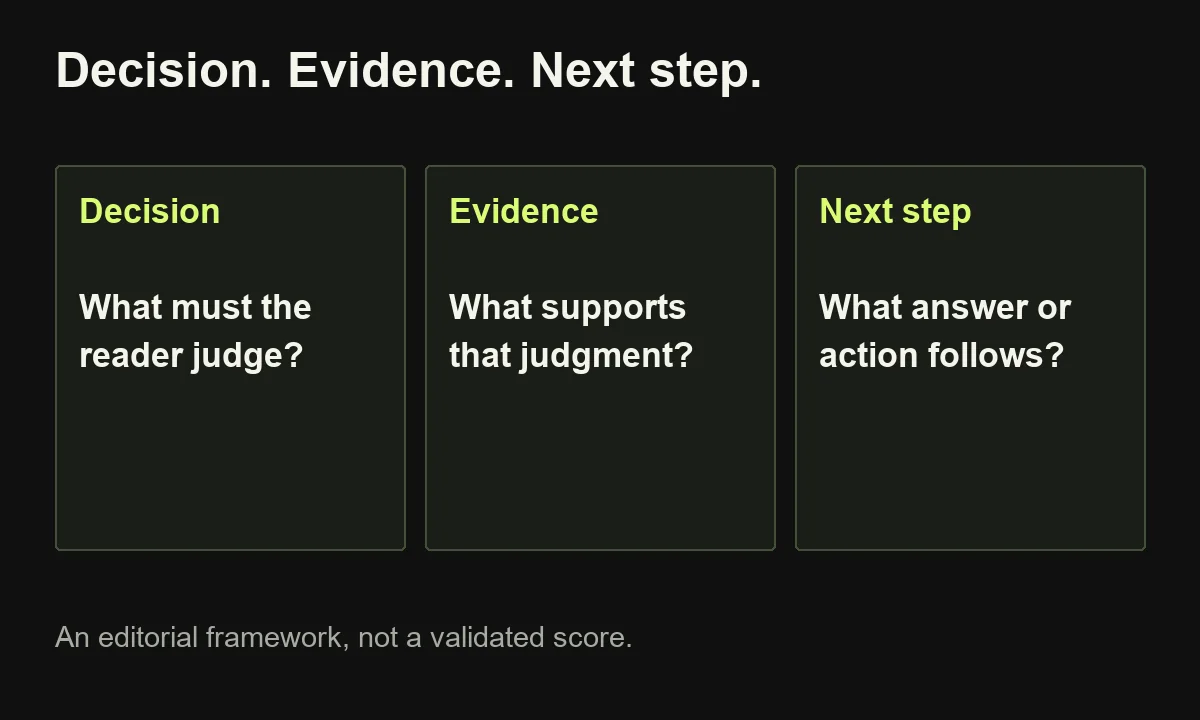
I propose three questions to turn a funnel label into an actionable brief: What decision should this content support? What evidence does that decision require? What next step would be useful? This is an editorial framework proposed here, not a validated scoring model or a guarantee of commercial results.
Decision defines the reader's task. “Learn about automation” is vague. “Determine whether our delays come from drafting or approvals” is specific enough to guide the article.
Evidence defines what the answer needs. A diagnostic may require observable symptoms and an explanation of causes. A supplier comparison may require delivery details and relevant project evidence. A purchase decision may require scope, constraints and commercial terms.
Next step defines the connection. It might be another explanation, a worksheet, a conversation with an internal colleague, or an enquiry. It should follow logically from the decision rather than automatically demand a sales call.
For the consultancy, a brief could read: Help a marketing manager distinguish drafting delays from approval delays, using a workflow map and review questions, then offer an options comparison.
That brief tells a writer more than “create a TOFU blog.” It also gives an editor a concrete quality test: could the intended reader make the stated distinction?
Use this editable content-planning worksheet to record the three fields alongside audience, offer, source requirements and owner. When an asset fails to answer its decision question, fix the answer before polishing its call to action.
Build one useful content path before a large calendar
Start with an offer you want to support and the questions buyers must resolve to evaluate it. Build a small connected set of assets around those questions. The appropriate TOFU, MOFU and BOFU content mix depends on your actual gaps; there is no universal publishing ratio that every business should follow.
Work backward from the offer. Suppose the consultancy sells a review-process audit. Its decision page should describe deliverables, access requirements, scope and what the team receives afterward.
Next, create the comparison buyers need before selecting that audit: when to improve process, hire capacity, or introduce automation. Then develop the diagnostic explanation that helps readers recognize which problem they have.
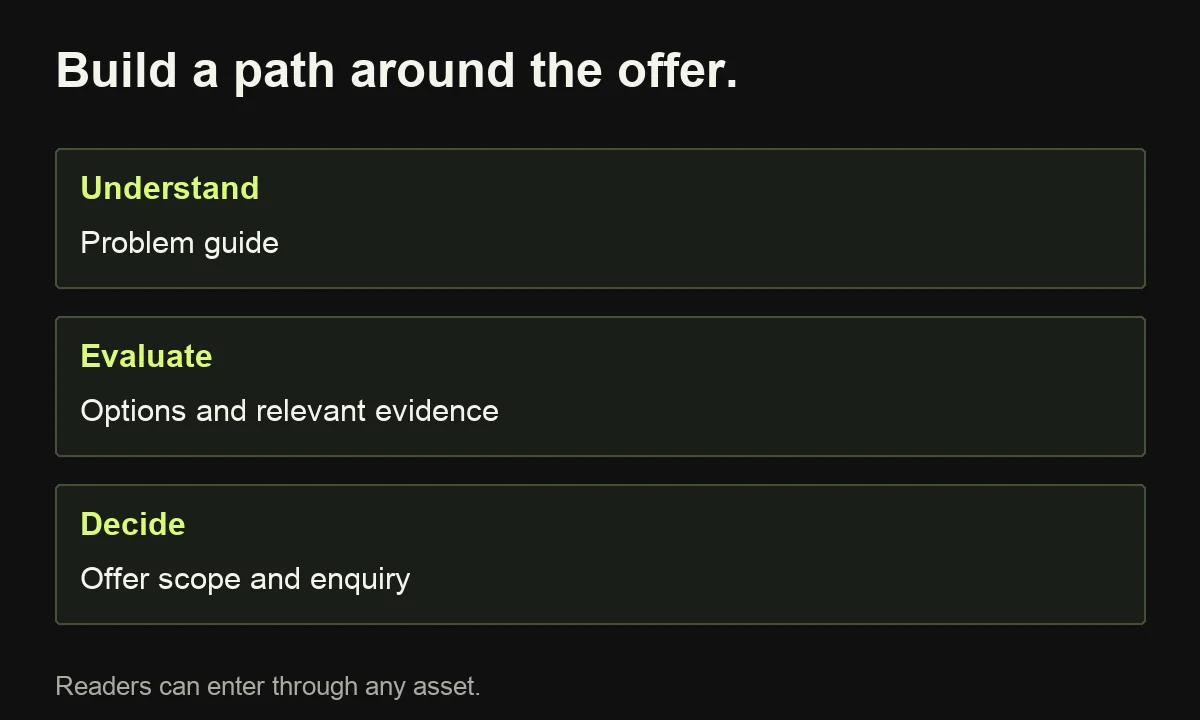
A practical first path contains four assets:
- Problem guide: identify where work gets stuck.
- Options comparison: explain which interventions address which causes.
- Relevant project: document what an intervention involved.
- Offer page: explain fit, scope and the enquiry process.
The project is conditional. If you lack relevant evidence, say so and provide a transparent method explanation. Do not manufacture a success story to complete the diagram.
Distribute each asset where its question arises: search, a useful social post, a sales conversation, or a follow-up requested by a prospect. A published page is not a distribution plan.
For a larger library, use a B2B content strategy audit to distinguish missing answers from existing answers that simply need clearer connections.
How should you measure each funnel stage?
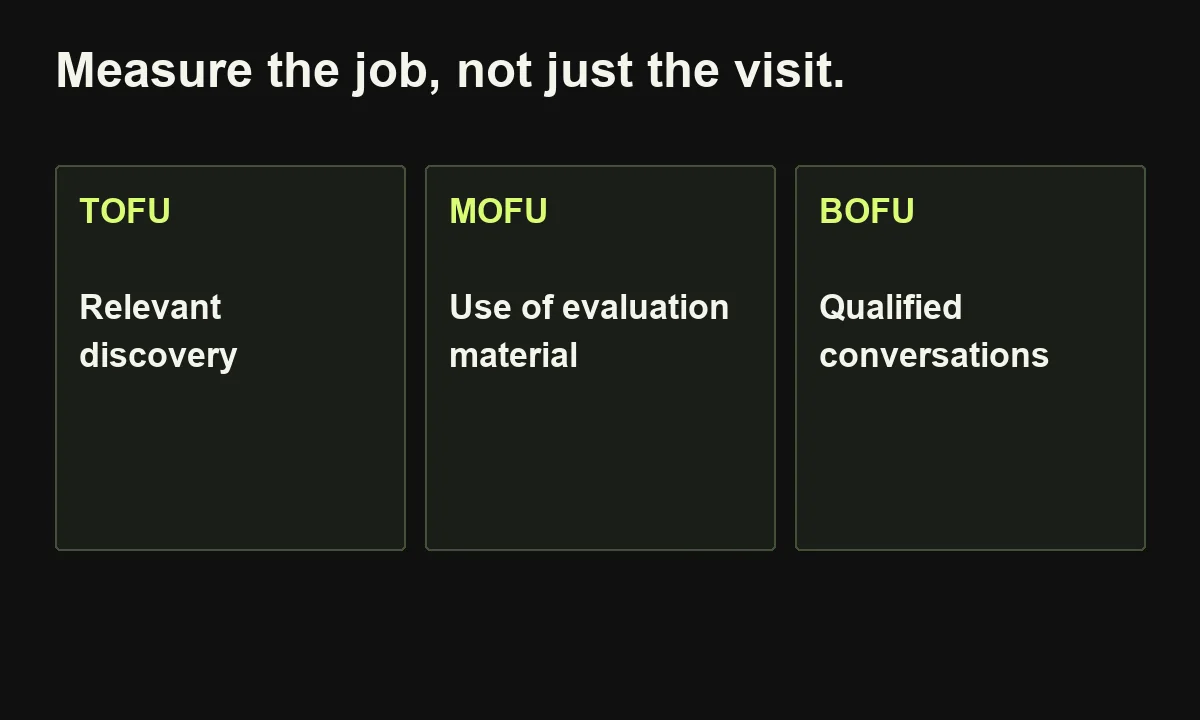
Measure content against the decision it supports, then connect those observations to qualified commercial outcomes. TOFU needs relevant discovery and useful onward engagement. MOFU needs evidence of evaluation. BOFU needs qualified enquiries and progress toward a suitable purchase. Page views alone cannot tell you whether a buyer's uncertainty was resolved.
For TOFU, inspect search queries, landing pages and onward journeys. Are you reaching the intended audience's questions, or attracting unrelated readers? Engagement data is a clue; it does not reveal understanding by itself.
For MOFU, examine use of comparisons, diagnostics and supporting evidence. Ask sales which questions remain after prospects read them. A worksheet download indicates interest in the resource, not necessarily purchasing readiness.
For BOFU, review enquiries against agreed fit criteria: the problem, service match, relevant stakeholders and feasibility. Track reasons opportunities do not progress. A contact form conversion and a qualified opportunity are different events.
Google Analytics defines attribution as assigning credit to touchpoints along a path. That is useful reporting, but the assigned credit does not capture every offline conversation or prove that one article caused a deal.
Use analytics alongside customer interviews and sales notes. Keep identifying contact details out of analytics events. Define your reporting window and qualification criteria before comparing performance.
A small, relevant audience may justify an asset that looks unimpressive in a traffic report. Equally, high readership should not excuse content that supports no meaningful buyer question.
How do you make funnel content useful for search and AI?
Make each page answer a distinct question accurately, support its recommendations, and connect readers to relevant detail. Use clear titles, concise opening answers, descriptive headings and inspectable sources. Search and AI discovery should build on those foundations; funnel labels, bold text and structured data do not guarantee rankings or citations.
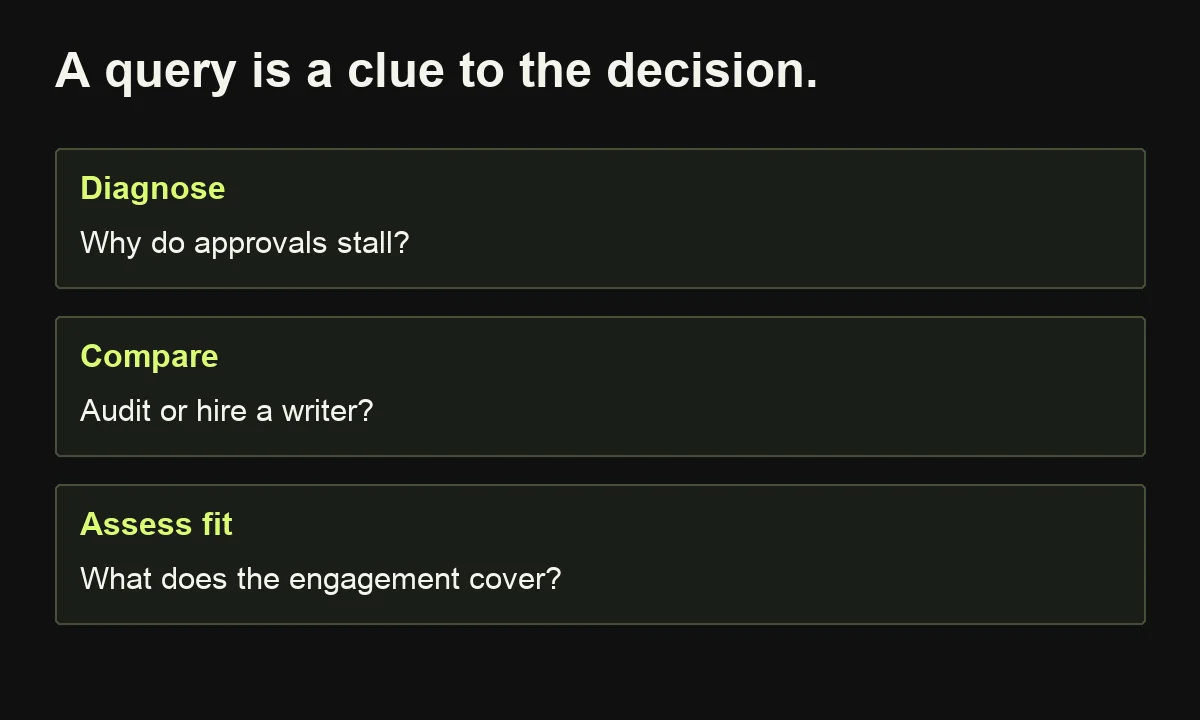
Map queries to decisions. “Why do approvals stall?” suggests diagnosis. “Content workflow audit versus hiring a writer” suggests comparison. “Content workflow consultant scope” suggests provider evaluation. These are illustrative queries, not measured search-volume or keyword-difficulty findings.
Check current results before assigning a stage. Similar wording can conceal different intent. Avoid separate pages that repeat the same answer merely to cover acronym variations.
Google's people-first content guidance asks whether content provides original information, clear sourcing and substantial value. For this topic, that means going beyond definitions into usable planning decisions.
Write explanations that stand alone. Identify whether an example is hypothetical or observed. Keep qualifications beside the claim. Link to primary documentation where it supports a factual statement.
Use meaningful diagrams and descriptive alt text; decorative repetition adds little. Google's link guidance recommends crawlable links and clear anchor text, which also helps readers understand destinations.
Measure visibility and qualified conversations separately. An AI citation, a search impression and a website enquiry are distinct outcomes. For the broader process, see my guide to ranking a blog.
Frequently asked questions about TOFU, MOFU and BOFU
Is a case study MOFU or BOFU?
Either, depending on its job. A case study is MOFU when it helps buyers evaluate an approach. It is BOFU when its context and evidence help assess a specific supplier. The label should follow the decision supported, not a rule that every case study belongs at the bottom.
Does every buyer pass through all three stages?
No. The labels organize content needs rather than prescribe a sequence. Buyers can enter anywhere, revisit questions, and share content with colleagues who have different uncertainties. Provide relevant answers without forcing everyone through the same route.
Should TOFU content be gated?
Not automatically. Decide whether collecting information serves the reader and your business. Keep essential explanations accessible. Consider an optional downloadable worksheet when the file itself is useful, rather than withholding the answer to generate a lead. Explain how submitted details will be used.
Which stage should a small business prioritize?
Address the clearest commercial gap. If interested prospects cannot understand your offer, improve decision content. If they cannot compare approaches, improve evaluation content. If suitable buyers rarely recognize the problem, strengthen relevant discovery. Review the diagnosis with evidence.
A useful funnel is a map of unresolved questions. If yours has become a spreadsheet of formats, rebuild the connection to buyer decisions. If you want help, share your offer and the questions prospects keep asking. We can identify which answers your content needs next.