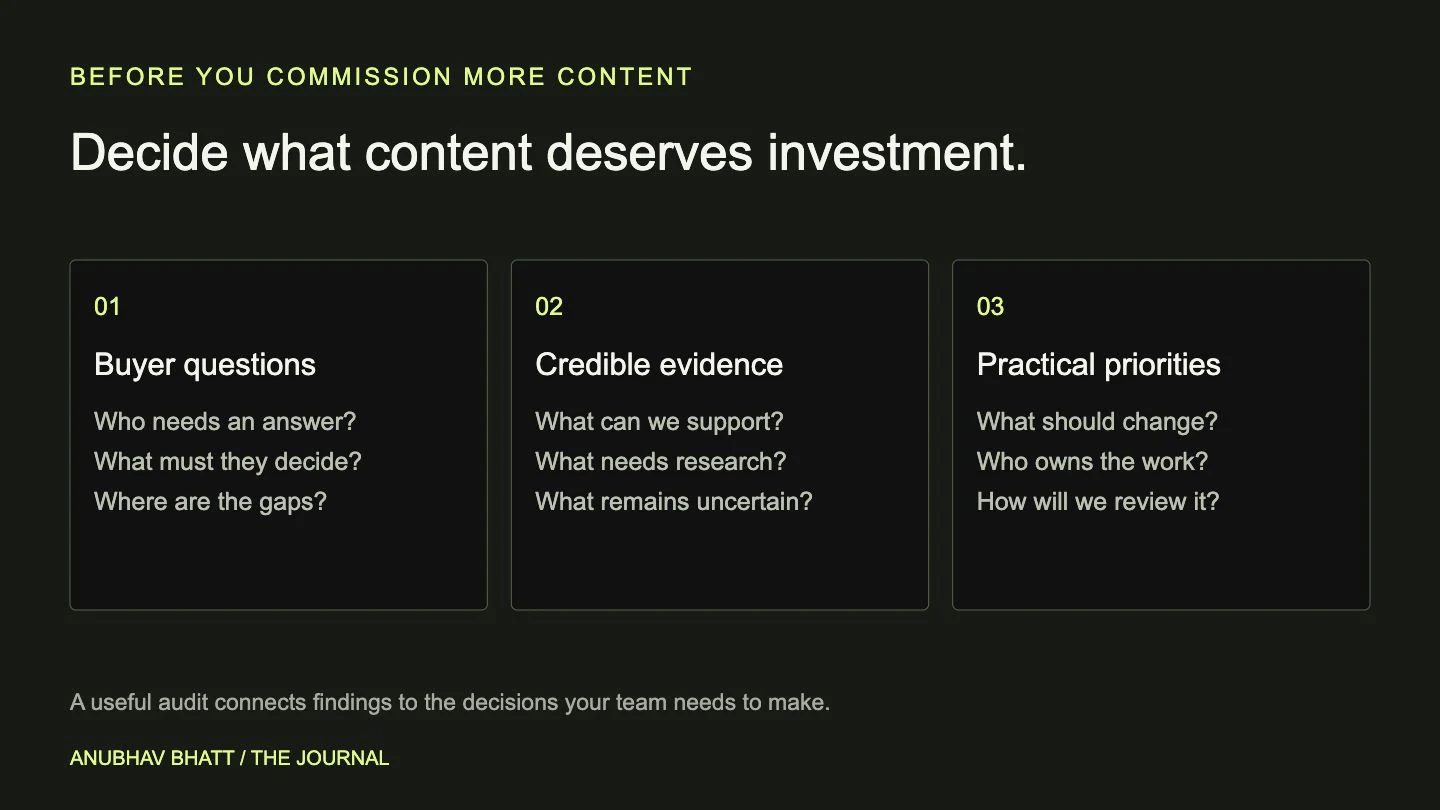
A B2B content strategy audit should tell you whether your existing content helps the right buyers make decisions, where that support is missing, and what to change first. Before hiring a consultant, agree on the business question, evidence available, pages and channels in scope, and the decisions the audit must support.
If your next content plan is another list of topics, pause before commissioning it.
You may need more articles. You may instead need a clearer service page, a relevant case study, or an explanation of how your engagement works. An audit should help you make that choice with evidence.
This guide is for a B2B team that already has content but wants to decide where its next investment belongs. It explains what to request, how to assess a proposal, and what a useful handover looks like.
What is a B2B content strategy audit?
A B2B content strategy audit reviews whether your content supports a defined audience, offer, and business objective. It connects buyer questions with existing assets, examines evidence and performance, and recommends priorities. The output should explain what to keep, improve, create, or investigate, with reasons your team can use to make investment decisions.
For this guide, strategy means choosing whom to help, what to help them understand, and which content deserves attention. An audit is a structured review of that direction against the material and evidence you have.
A content inventory lists assets. A content gap analysis identifies missing or insufficient coverage. Neither is a complete strategy audit on its own. The consultant still needs to explain which gaps matter to your business and why.
How is this different from an SEO or workflow audit?
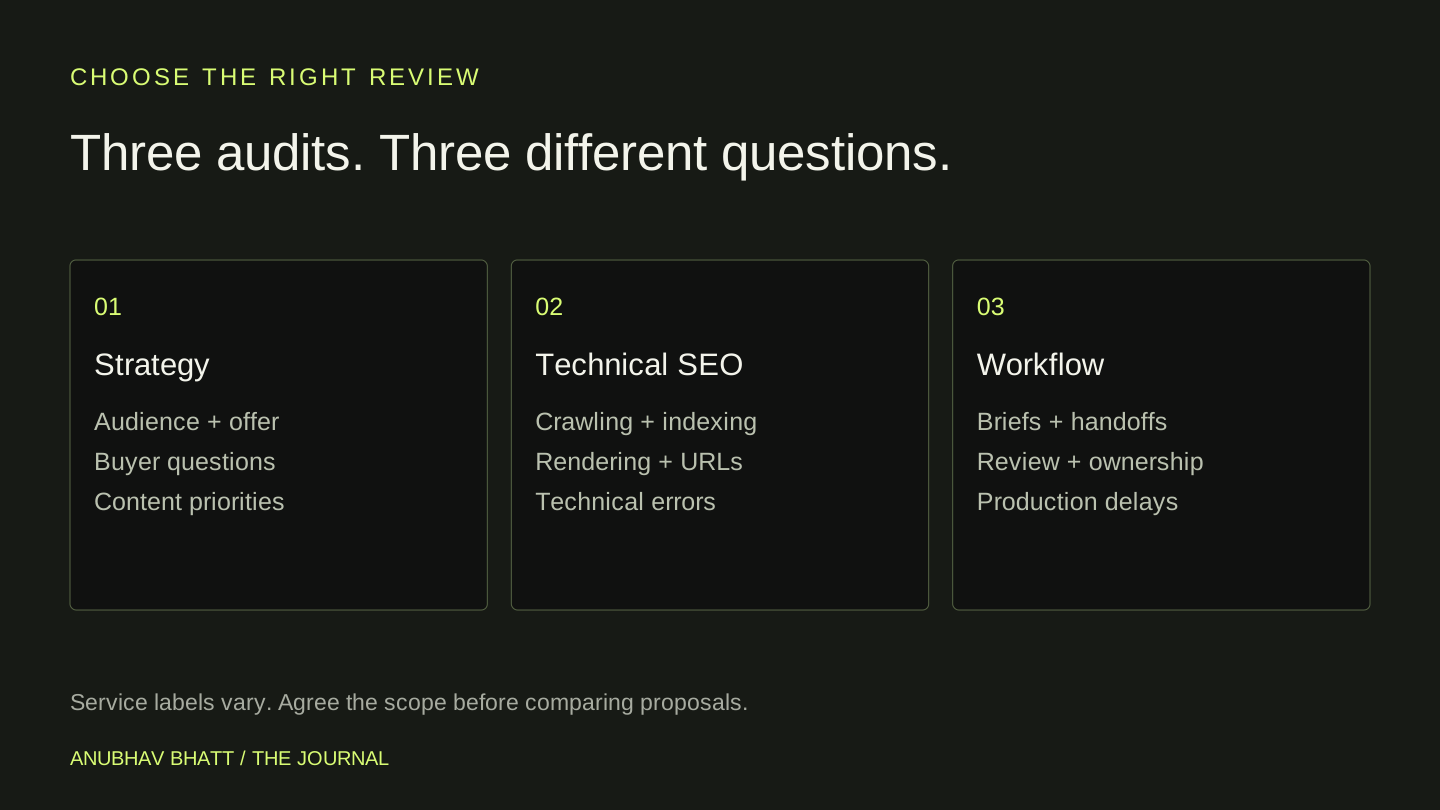
Service labels vary. Ask the provider to define the scope instead of assuming the name tells you everything.
| Review | Main question | Typical work to discuss |
|---|---|---|
| Content strategy audit | Does the content support our audience and offer? | Buyer questions, messaging, evidence, coverage, priorities |
| Technical SEO audit | Can search engines access and interpret the site properly? | Crawling, indexing, rendering, canonical URLs, technical errors |
| Content workflow audit | Can the team produce and approve content reliably? | Briefs, handoffs, reviews, ownership, production delays |
The findings can overlap. A useful page that cannot be indexed needs technical attention. A strong strategy that the team cannot execute needs operational attention. If production is your main bottleneck, see my guide to hiring a B2B content automation consultant.
When is a strategy audit worth considering?
Consider a strategy audit when you need to make a specific content investment decision and your current evidence does not give you a clear answer. Useful triggers include a changed offer, inconsistent messaging, missing sales-support material, or traffic that appears disconnected from suitable enquiries. An audit is worthwhile when its findings can change what you do next.
Start with a question you can act on:
- Which buyer questions should our service pages answer before we add more blog posts?
- Do our case studies demonstrate the work prospects are asking about?
- Which existing assets should we update for a new offer?
- Where does our website explain the service differently from our sales conversations?
“Tell us everything wrong with our content” is a difficult brief to price or complete. “Help us prioritize content for our new managed service” gives the review a boundary.
When you may not need a full audit
If the problem is one outdated page with a clear replacement brief, commission that update. If you are launching a new business with little existing content, a positioning and content-planning engagement may be more appropriate.
The aim is to buy the work your decision requires. A long report is not automatically a better starting point.
What should a B2B content strategy audit include?
A useful audit should define the audience and offer, inventory the relevant assets, assess buyer-question coverage, review supporting evidence, and examine available performance data. It should then prioritize recommendations against the agreed business objective. The exact scope depends on your decision; a website review and a cross-channel content programme require different inputs and levels of effort.
The audience and offer being assessed
Specify the service or product, the people involved in evaluating it, and the action you want the content to support. “B2B buyers” is too broad if your offer serves a particular role or problem.
For a cybersecurity consultancy, the technical reviewer may need delivery detail while the budget owner needs a clear scope and explanation of commercial risk. That is a hypothetical example, not a description of a client engagement.
A bounded inventory
Agree which pages, documents, and channels are included. An inventory might cover service pages, case studies, selected articles, sales decks, and enquiry pages.
Ask whether the consultant will review every asset or a sample. If a sample is used, the report should state how it was chosen and what it cannot establish.
Buyer questions and missing evidence
Ask what a prospective client needs to understand before contacting you or evaluating a proposal. Useful questions often concern suitability, approach, proof, scope, and what happens after the enquiry.
Google’s people-first content guidance includes questions about original information, clear sourcing, and whether the reader receives a satisfying answer. Those are useful checks when examining an individual asset. They do not replace a review of your business priorities.
Performance with context
Request an agreed reporting period and a list of data sources. Depending on access, these could include Search Console, website analytics, enquiry records, and feedback from sales or customers.
Google’s Search Console Performance report shows search metrics such as clicks and impressions. Those metrics help describe visibility and visits; they do not, by themselves, show whether an enquiry was commercially suitable.
A consultant should distinguish observed evidence from interpretation and a recommendation to test.
How should a consultant identify the gaps that matter?
A consultant should connect each proposed content change to a buyer question, available evidence, and a relevant next step. They should also explain what the existing asset does well and what remains uncertain. Prioritize gaps that obstruct evaluation of your offer, rather than assuming every competitor topic or keyword variation deserves a new page.
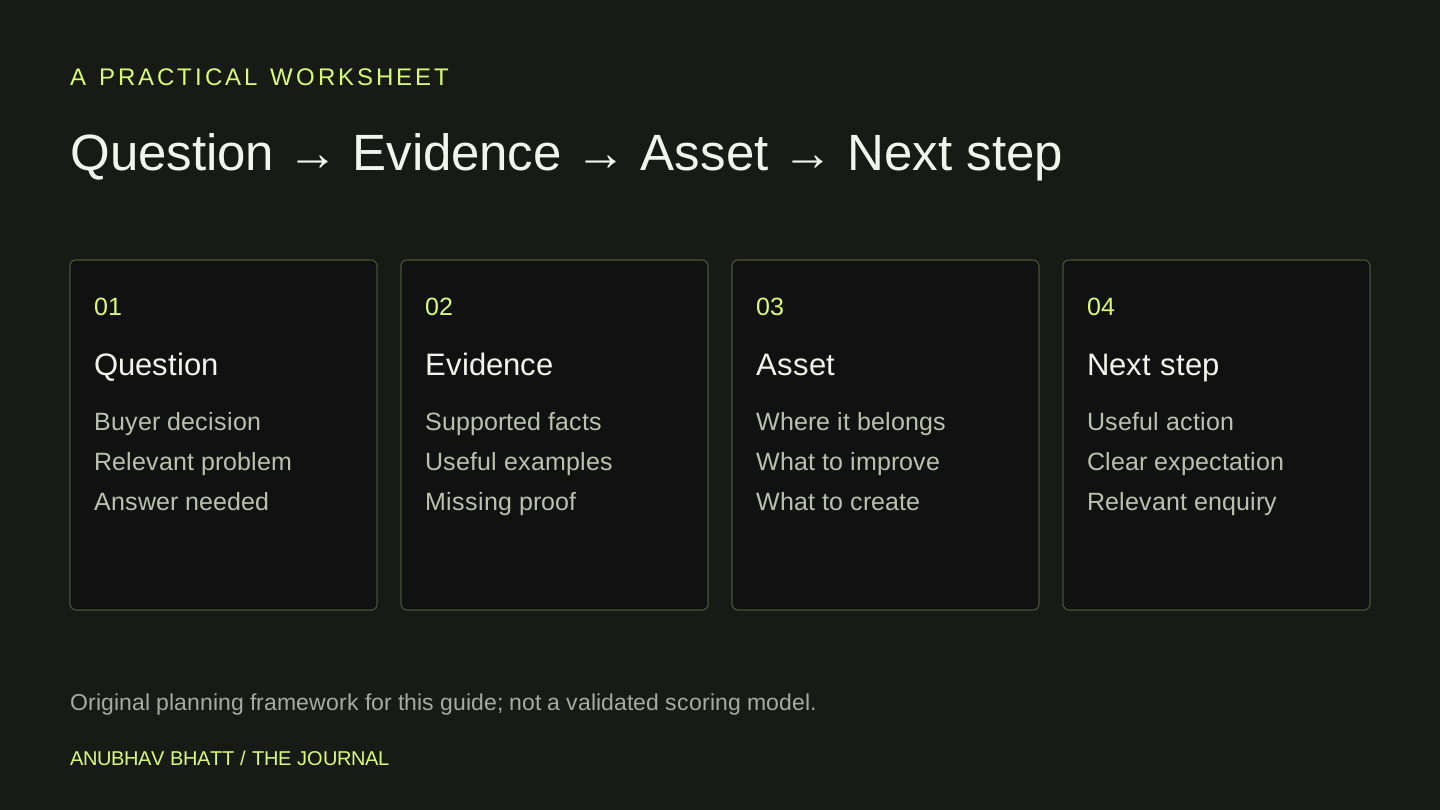
Here is a practical worksheet I propose for this review: Question → Evidence → Asset → Next step. It is a planning framework for this article, not a validated scoring model.
| Field | What to record |
|---|---|
| Question | What does the buyer need to understand or decide? |
| Evidence | What can support the answer, and what is missing? |
| Asset | Where does the answer belong? |
| Next step | What useful action follows from reading it? |
A worked example
Imagine a cloud migration consultancy whose service page describes capabilities but does not explain how a project is scoped.
- Question: What determines the scope of a migration engagement?
- Evidence: The actual discovery process, project assumptions, and delivery dependencies, confirmed by the people responsible for the work.
- Asset: A service-page section explaining scoping, supported by a deeper guide if the subject warrants it.
- Next step: An enquiry asking the prospect to describe the environment and intended outcome.
The recommendation is to make evaluation easier. It is not to publish another generic article about the benefits of cloud migration.
Before recommending the change, check whether prospects actually ask this question and whether the service page already answers it elsewhere. A plausible gap is still a hypothesis until the evidence supports it.
What my Draup work illustrates
In my Draup case study, I describe working with the editorial lead on a quarterly strategy process and using buyer research to inform the content journey. The work connected priorities, ownership, and execution rather than treating the publishing calendar as the strategy.
The lesson I would apply to an audit is straightforward: understand the buyer’s decision before deciding what to publish next.
The case study is my first-party account. Its process provides context for my approach; it does not establish that the same decisions or outcomes will apply to your business.
What should you receive at the end of the audit?
Ask for an annotated inventory, a buyer-question map, prioritized recommendations, and an implementation brief for the most important changes. Each recommendation should include its evidence, limitations, owner, and next action. A useful handover gives your team enough detail to make decisions and commission the work, rather than requiring another engagement just to interpret the report.
I would look for these four deliverables in a B2B content audit proposal:
- Findings you can trace. The relevant page or asset, the observation, and the reason it matters.
- A priority list. What to address first, what can wait, and the rationale for that order.
- Usable briefs. The audience, question, evidence needed, and intended action for the recommended work.
- A review plan. What to measure after implementation and when to revisit the decision.
You do not need a numerical score for every page. If a consultant uses a content audit checklist or scorecard, ask what the score represents and how it changes the recommendation.
Ask for these proposal details before signing
- Which assets, channels, and offers are in scope?
- What data or stakeholder access do you need?
- Will you interview people, review records, or work only from public pages?
- Which recommendations include an implementation brief?
- Are writing, design, SEO fixes, or workflow changes included separately?
- What assumptions could change the scope or delivery date?
These answers make proposals easier to compare. They also help you avoid paying for work that your team has already completed.
How much does a B2B content strategy audit cost?
The cost of a B2B content strategy audit depends on the number of assets, the depth of buyer research, the channels covered, and the detail of the handover. Compare quotes against the same brief. Separate discovery and analysis from implementation, and ask which additional costs or scope changes require your approval.
I do not list a standard audit price here because the work needs to be scoped to the decision you want to make.
A focused review of one service and its supporting content is different from an audit of multiple product lines, international sites, and sales materials. Ask for a bounded first engagement if you are uncertain about the larger scope.
Content strategy consultant proposals should make the payment milestones and included deliverables clear. A lower quote can be appropriate for a narrow review; a higher quote is not evidence of greater usefulness without a clearer scope.
How do you measure whether the audit was useful?
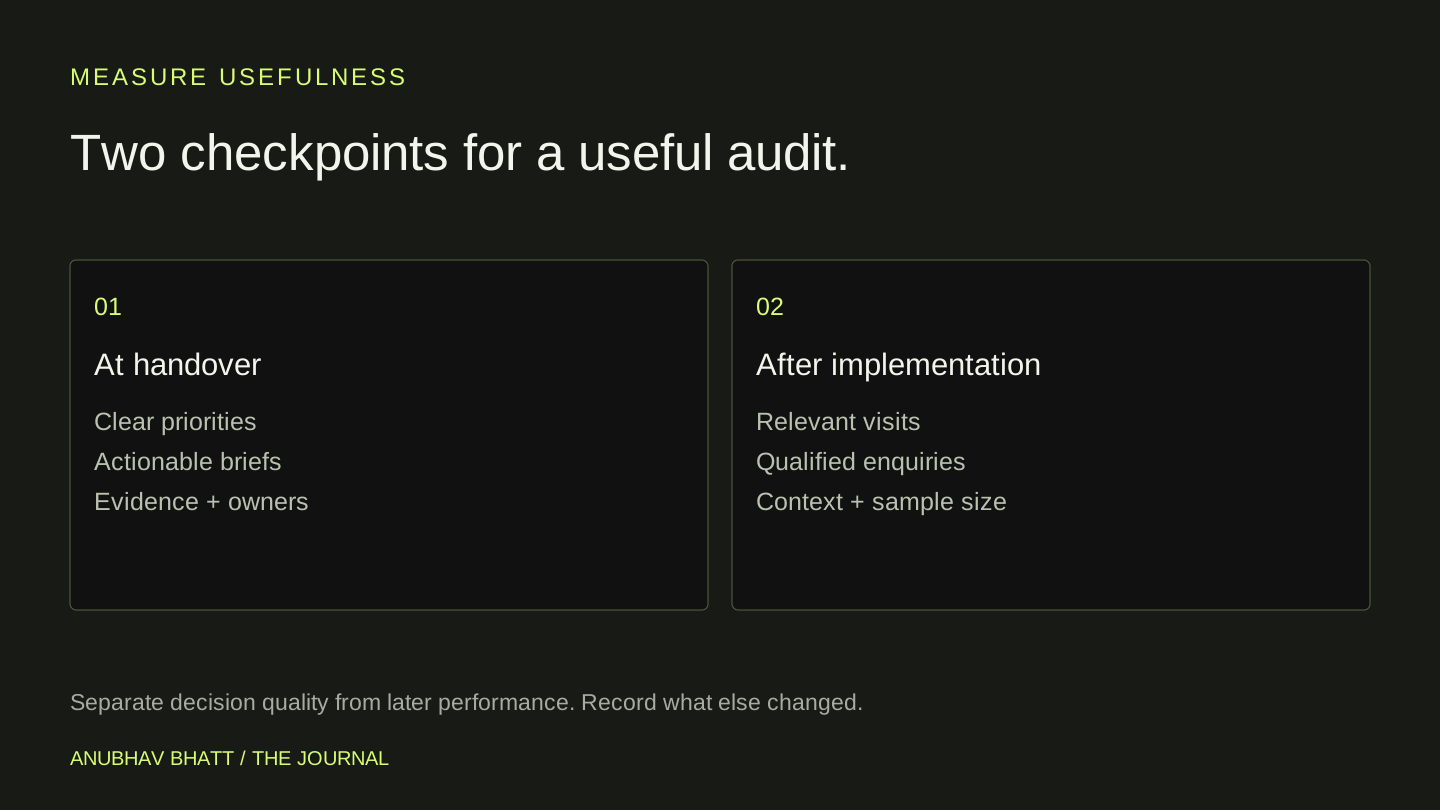
Measure the audit first by the quality of the decisions it enables: a clearer priority list, actionable briefs, and explicit evidence behind recommendations. After implementation, examine agreed measures such as relevant search visits, service-page engagement, and qualified enquiries. Record the period and other changes affecting performance, and avoid attributing every improvement to the audit alone.
Separate two checkpoints:
At handover: can the team act?
Can the team explain what it will change, why it matters, who owns the work, and what evidence is still needed? If the report leaves those questions unanswered, request clarification before commissioning implementation.
After implementation: did the changes help?
Define a qualified enquiry in terms your team can use, such as fit with the service, a relevant business problem, and a feasible engagement scope. Then assess enquiries against that definition.
Review the relevant pages and queries alongside those enquiries. Note other changes, including campaigns, seasonality, revised offers, or changes to tracking. A small number of enquiries should be reported as a small sample, not converted into a confident performance claim.
SEO, AEO, and GEO checks can be part of implementation: clear answers, helpful structure, supported claims, relevant links, and accurate page metadata. They are not substitutes for a useful answer or guarantees of search rankings and AI citations.
Frequently asked questions
Can I do the audit internally?
Yes, if your team has the time, evidence, and ability to question its existing assumptions. An external consultant can help with synthesis and prioritization when ownership is unclear or stakeholders disagree. Ask for focused support around the decision you cannot resolve rather than outsourcing every part of the review.
Can an audit work without analytics access?
A consultant can review messaging, coverage, evidence, and page structure without analytics. They cannot reliably diagnose your actual traffic or conversion performance from public pages alone. The report should state which findings are qualitative, which data is missing, and what needs further investigation.
Will the audit include SEO, AEO, and GEO?
Only if those checks are included in the agreed scope. Ask whether the review covers content relevance and answer clarity, technical search issues, or both. A provider should explain what they will inspect, what evidence they can collect, and which outcomes they cannot promise.
Should weak content be deleted?
Not automatically. First consider whether it can be corrected, consolidated, or better connected to the relevant service. Before removing or redirecting a page, review its useful content, search visits, links, and other roles. The audit should explain the proposed action and the evidence behind it.
How long will an audit take?
The timeline depends on the agreed asset set, research depth, access, and stakeholder availability. Request milestones for intake, analysis, discussion, and handover. A delivery date should state what your team must provide and when; a fast report is useful only if it answers the agreed question.
Want clearer priorities for your next content investment?
I work across B2B content strategy, writing, and marketing automation. If you are unsure whether your next investment should be new content, stronger service pages, or better evidence, tell me what you are trying to decide.
Send me your website and a short description of the problem. We can discuss whether a focused review would help, or whether you already have enough direction to move straight into the work.