AI summary
Choose a B2B content partner by the work and named ownership you need. A senior freelancer can connect research, direction, and writing directly; an agency can coordinate broader capabilities when those are necessary.
- Diagnose before outsourcing: Separate missing strategy, weak writing, insufficient capacity, and unreliable handoffs. More production will not resolve every underlying problem.
- Inspect who does the work: Map research, recommendations, writing, review, and continuity to named people. Direct access matters when it preserves the reasoning behind your content.
- Compare useful accepted output: Match scope, then include provider fees, tools, and your briefing and review effort. Assess a paid pilot against buyer usefulness, evidence, clarity, and feedback.
- Choose a maintained relationship: Check capacity, specialist needs, shared records, and update responsibilities. For sustained strategy and writing around one offer, direct senior ownership deserves serious consideration.
Hire a B2B content marketing agency when you need coordinated capabilities and the proposed team can demonstrate relevant strategy, research, writing, and delivery. Choose a senior freelancer when your priority is direct access to the person owning the thinking and execution. Compare named people, responsibilities, evidence, and working methods before choosing either model.
You are not buying a company name. You are buying a way for your business to understand its buyers and communicate something worth their attention.
That distinction matters when the pitch is polished but the delivery model remains vague. Who interviews your customers? Who chooses the argument? Who writes the draft? Who remembers why the positioning changed three months later?
An agency may answer those questions well. A freelancer may answer them poorly. The label does not determine the outcome. The structure of the engagement deserves closer inspection.
This guide is for B2B founders and marketing leaders considering outsourced content strategy and writing. It makes the case for working directly with a senior specialist when continuity and accountable judgment are the main requirements, while explaining when an agency's broader capacity is useful.
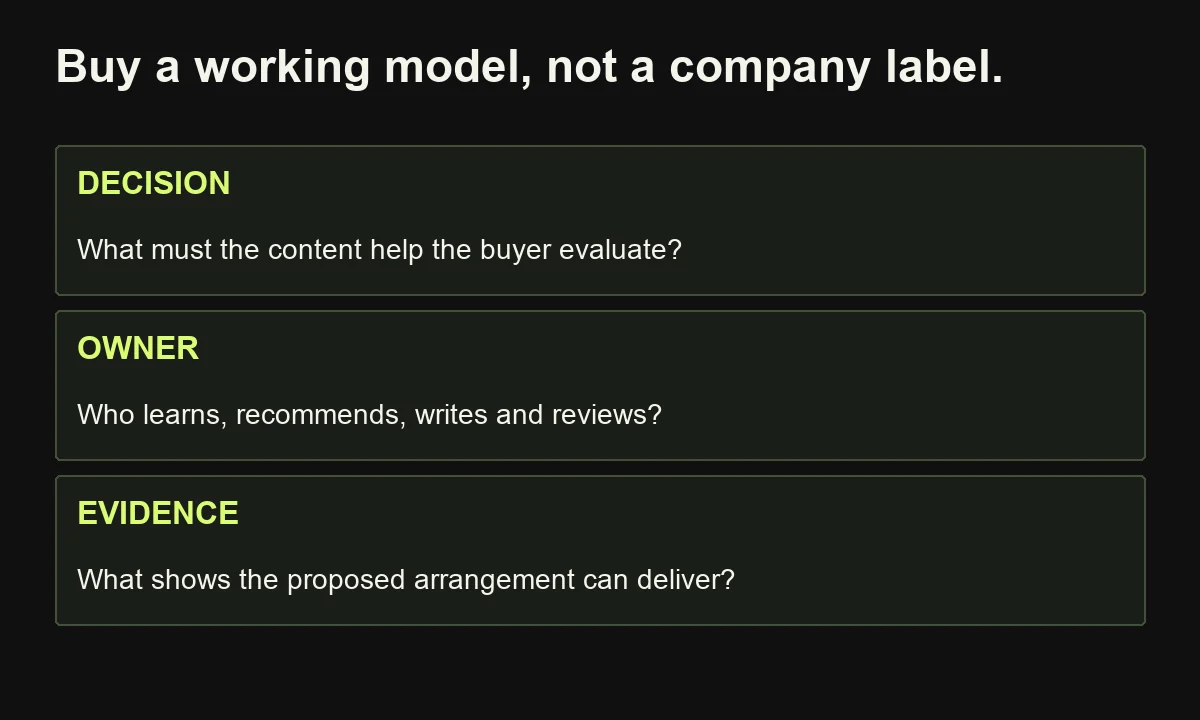
My proposed selection tool is an ownership map: connect each important content decision to its named owner, evidence, deliverable, and review point. It is an editorial buying aid, not a validated scoring model.
Use that map to compare the engagement you would actually receive.
What should a B2B content marketing agency actually deliver?
A B2B content marketing agency should help a defined audience understand, evaluate, and act on your offer. That can require buyer research, positioning, editorial strategy, writing, design, distribution, and measurement. Agree which responsibilities are included. A calendar and a monthly article quota describe activity; they do not establish whether the content supports a useful buying decision.
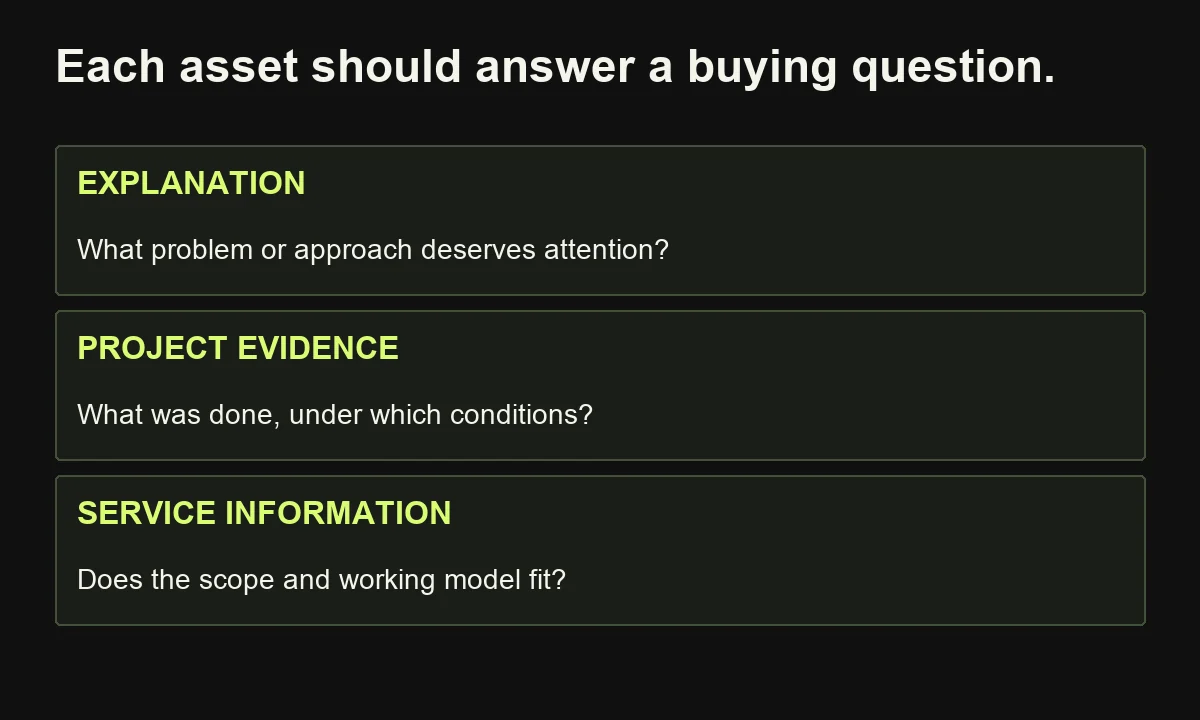
Start with the questions prospects need answered: What problem deserves attention? Which approach fits? What evidence supports it? What would working together involve?
Then connect the proposed deliverables to those decisions. An article might diagnose the problem. A case study might explain a relevant intervention. A service page should clarify fit, scope, and responsibilities.
The 2025 Edelman–LinkedIn report found that 55% of surveyed hidden decision-makers agreed that reviewing thought leadership was an important way to vet vendors. Its methodology lists 1,934 executives, a United States surveyed market, and March–April 2025 fieldwork. This is self-reported buyer research, not an experiment comparing agencies and freelancers.
The practical implication is to write for people beyond the original contact. Finance, operations, and other reviewers may receive your content without earlier conversations.
Ask a prospective partner to explain what each asset enables that second reader to assess. If the answer is only “traffic” or “engagement,” the proposal may need a clearer connection to your business and the buyer's evaluation.
When is an agency the right choice?
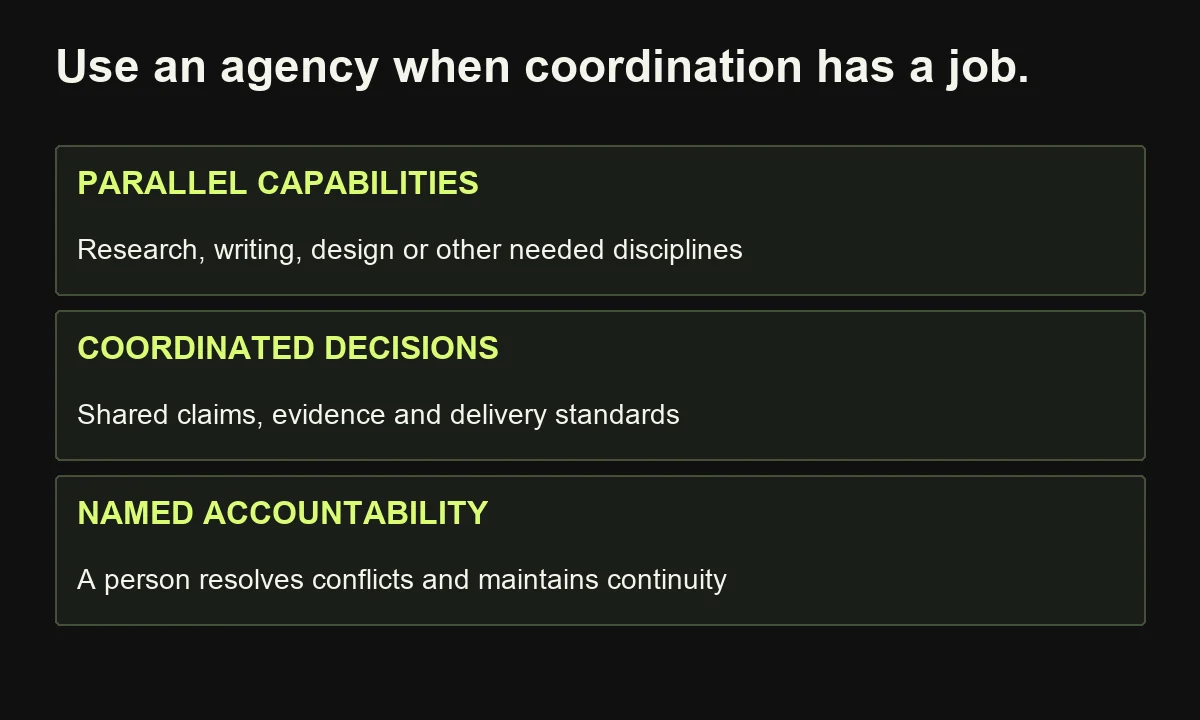
An agency is a sensible choice when the work needs several coordinated disciplines, substantial parallel production, or coverage that one specialist cannot responsibly provide. The agency still needs named ownership and a credible delivery plan. Choose the team because those capabilities solve your requirements, rather than assuming a larger organization automatically provides stronger strategic attention.
For example, an international launch may require research, technical writing, design, video, localization, and channel execution. A maintained team can be valuable when those outputs genuinely need to move together.
Ask how the team coordinates them. Which person resolves conflicting recommendations? Who checks that a video and a service page make the same promise? Who remains accountable when personnel change?
The IPA–Tracksuit 2026 research reports positive perceptions of agency value alongside gaps in the strategic thinking clients want and perceive they receive. It draws on 200 senior brand-side decision-makers with substantial marketing budgets, plus interviews. It is not a small-business or agency-versus-freelancer trial.
That evidence is a reason to examine the actual partnership, not dismiss agencies as a category.
Reconsider the agency model when your main need is one senior content owner and the proposed engagement introduces several coordination layers without explaining their value. You may be paying for a structure your project does not require.
When is a senior freelancer the better fit?
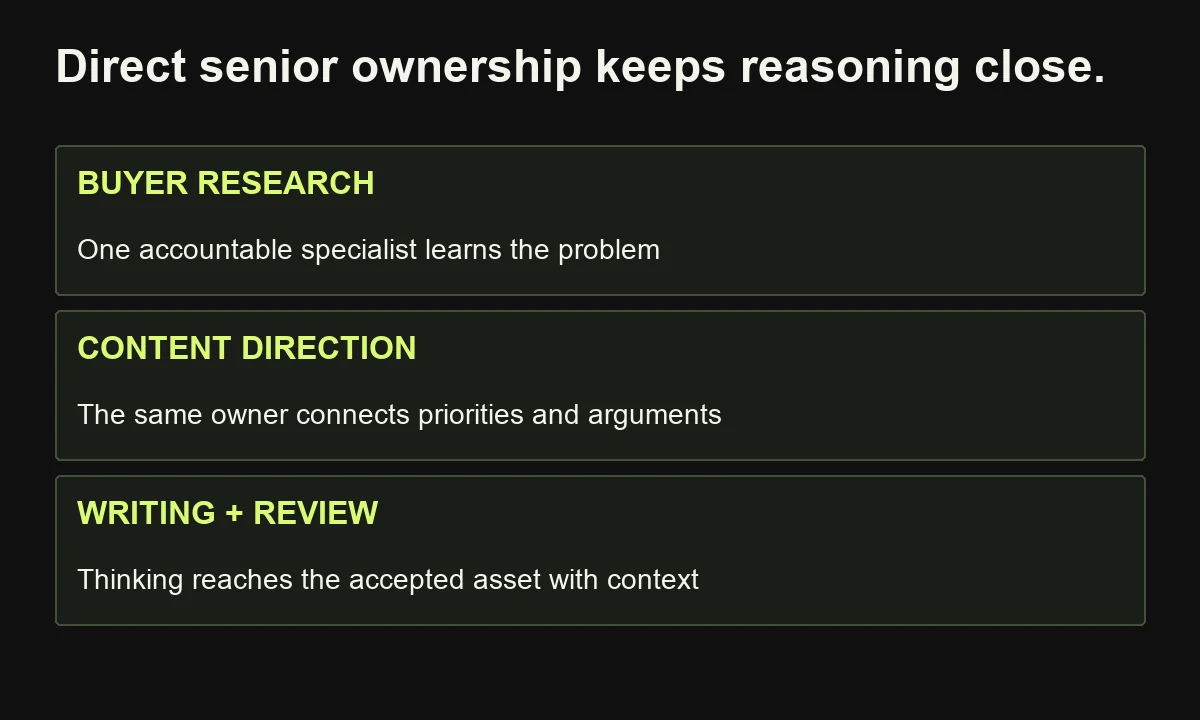
A senior freelancer can be the better fit when you need one experienced person to connect buyer research, content direction, and writing. Direct communication can keep the reasoning close to the work when that person owns the full assignment. Confirm the scope, available capacity, and continuity arrangements; independent status alone does not guarantee attention or expertise.
This is more than hiring someone to fill a content calendar. The useful partner can question the brief, identify missing evidence, choose the angle, write the argument, and explain what should happen next.
For a founder or lean marketing team, that operating model can be easier to assess: the person discussing the problem is also responsible for translating it into content.
The advantage is fewer avoidable handoffs, not a promise that freelancers care more. A specialist who only receives keywords and delivers drafts may leave the strategic gap unchanged.
Ask who will conduct interviews, inspect sales objections, build the content plan, write, and review. If additional specialists are involved, agree their roles and coordination before the work begins.
Also ask about workload, absences, turnaround dependencies, and what can realistically run in parallel. A credible freelancer should be clear about the boundaries rather than promise unlimited capacity.
If your need is sustained research, direction, and writing around one offer, direct senior ownership deserves serious consideration before committing to a larger production arrangement. The fit should follow the work you need someone to own.
Do you need a strategist, a writer, or more production capacity?
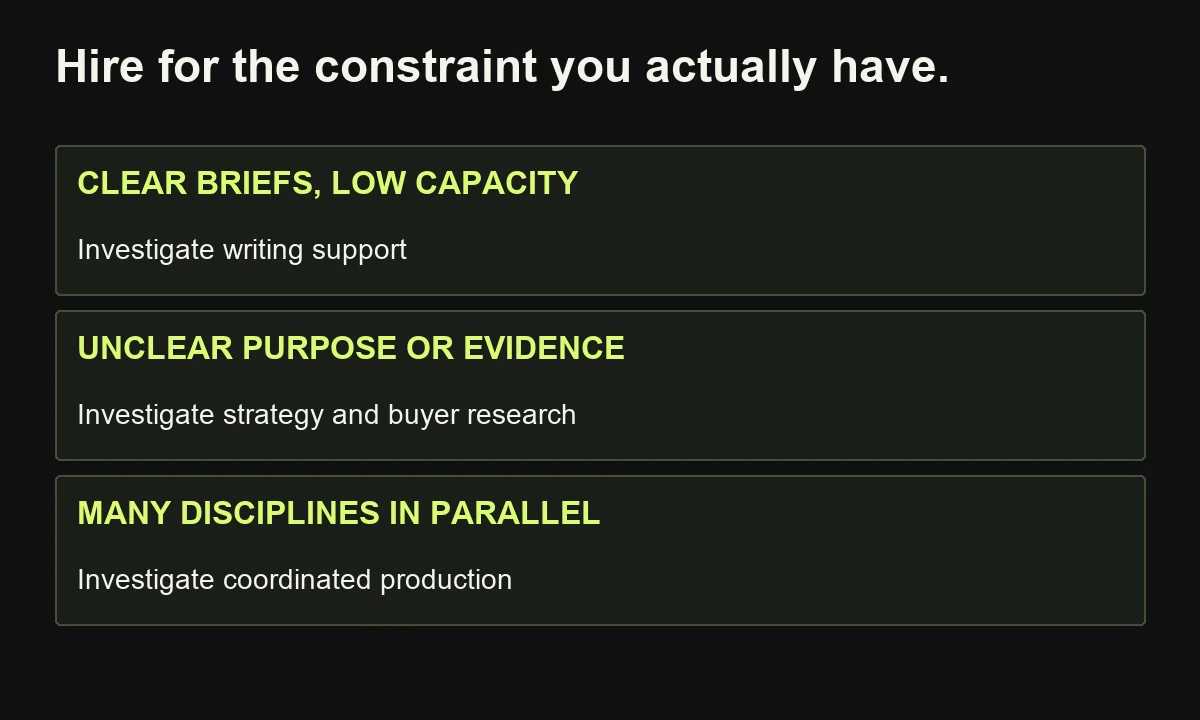
Hire a writer when the audience, argument, evidence, and review process are already clear. Hire a content strategist when those decisions need to be developed or challenged. Look for an integrated strategy-and-writing engagement when you need both direction and execution. Additional production capacity is useful only after the team knows what deserves producing.
A common symptom is repeated rewriting. The draft might lack skill, but the brief might also contain unresolved positioning or several incompatible audiences.
Before seeking proposals, identify where the work breaks down:
| Situation | Responsibility to investigate |
|---|---|
| Good briefs, insufficient writing time | Writing capacity |
| Plenty of topics, unclear commercial purpose | Strategy and buyer research |
| Strong ideas, weak finished arguments | Writing and editorial judgment |
| Approved assets, unreliable handoffs | Content operations |
| Several disciplines need parallel delivery | Coordinated production |
CMI's 2026 B2B research reports content relevance, quality, and team skills among the factors effective respondents associated with improvement. It covers 1,015 B2B marketers, mostly from North America, surveyed in 2025. These are self-reports, not causal evidence that a particular staffing model performs best.
The buying lesson is to assess capability against the constraint. Do not use “we need an agency” as a substitute for diagnosing the problem.
A senior freelance content strategist who also writes can own both layers when the engagement supports them. Someone offering only inexpensive article production may be selling a different service, even if their proposal uses the same strategic vocabulary.
How can you tell who will actually own the work?
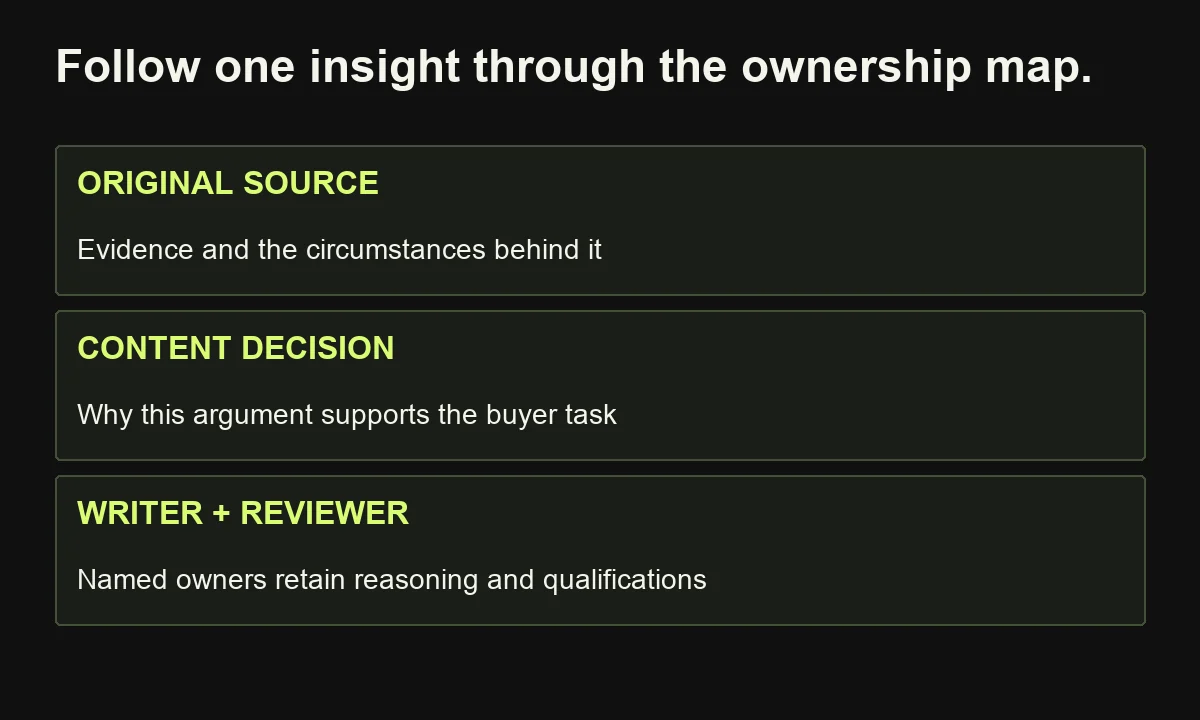
Ask for an ownership map before assessing the package. Name the person responsible for research, recommendations, writing, review, distribution, and learning. Distinguish the person presenting the proposal from the people delivering it. The goal is visibility into decisions and handoffs, rather than an assumption that account management or teamwork is inherently wasteful.
Use these five fields for each responsibility:
- Owner: who does the work and who makes the final recommendation?
- Input: what source material or access do they need?
- Output: what will your team receive and use?
- Review: who approves it, and against which criteria?
- Continuity: what happens when the person or scope changes?
Then follow one hypothetical buyer interview through the process. Does the writer receive the original evidence and context, or only a summary? Can they ask the strategist why one observation mattered more than another?
For a freelancer, check whether the claimed end-to-end ownership is real. For an agency, check whether the handoffs preserve the reasoning and whether you can reach the appropriate specialist.
Multiple clients are not proof of indifference. Both agencies and freelancers manage competing commitments. Ask for a realistic allocation, response expectations, and escalation path instead of assuming exclusivity.
The risk worth investigating is lost context: a recommendation survives as a task, while its evidence and qualifications disappear. A well-designed team can prevent that; direct specialist ownership can make the chain simpler where broad coordination is unnecessary.
How should you assess expertise and relevant work samples?
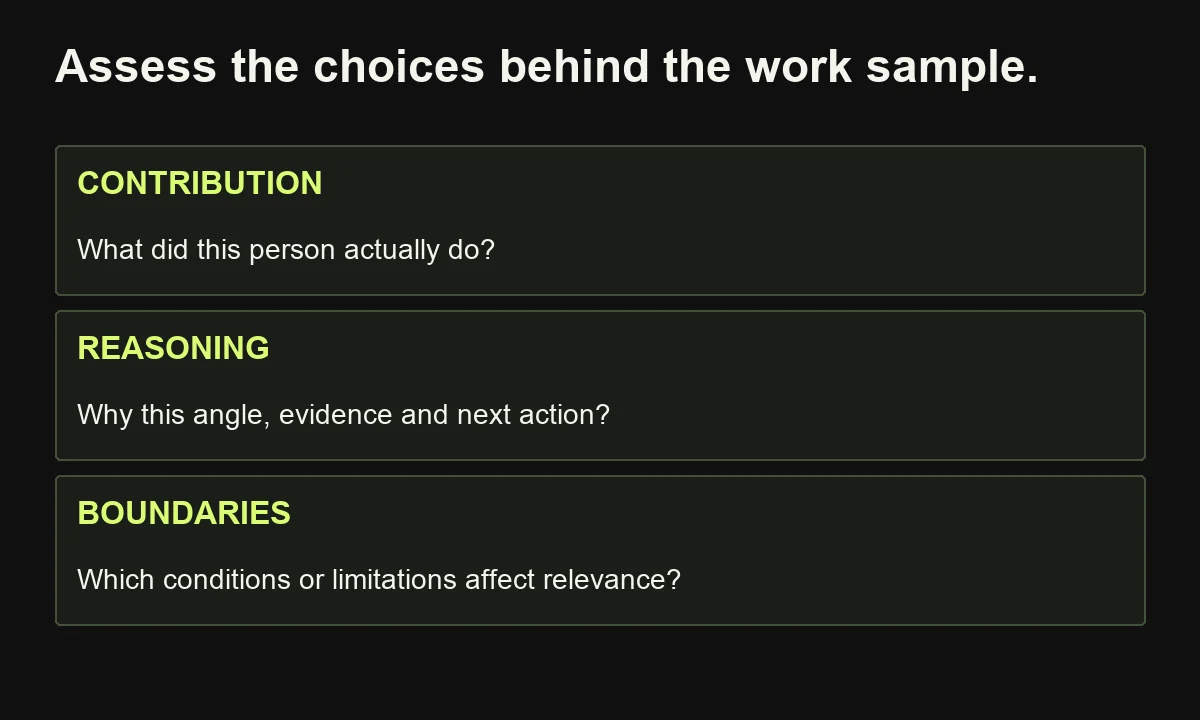
Assess the reasoning behind the work, not only the finished design or client logo. Ask what the partner learned, which decision the content supported, why they chose the approach, and how the evidence was checked. Relevant experience helps establish fit, but a case-study result does not predict your outcome under different conditions.
Request one example close to your problem. It does not have to come from the exact industry if the person can explain transferable decisions and important differences.
Read the asset as a buyer. Can you identify the argument, supporting evidence, trade-offs, and useful next step? Does the writer explain complex material plainly? Could a colleague understand it after receiving a forwarded link?
In my Draup case study, I describe connecting a quarterly strategy process, named responsibilities, and buyer research with the content journey. The relevant hiring lesson is the work upstream of drafting: understand what the channels must help buyers decide, then organize execution around that purpose.
That is my first-party project account. It is not an independently audited comparison of delivery models or a guarantee of results for another company.
Ask candidates to explain their personal contribution and what other people did. A polished portfolio may demonstrate a team's capability without establishing the specific writer's judgment.
A credible discussion should reveal choices, uncertainty, and revisions. “We wrote thirty blogs” tells you the output volume; it leaves the usefulness and the underlying thinking unresolved.
What should buyer research and briefing include?
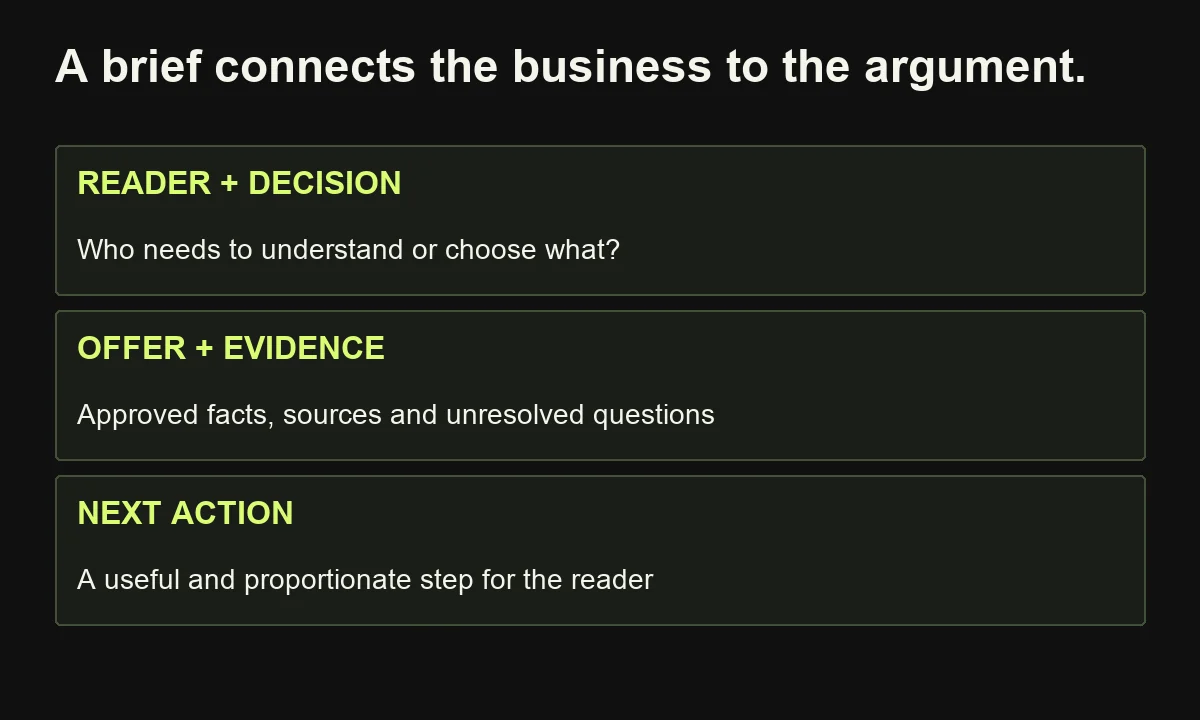
A useful brief identifies the audience, the decision being supported, the approved offer facts, the evidence available, and the next action. The partner should help clarify those inputs where needed. Briefing is a working conversation about the problem, not merely a form you complete before someone starts producing articles.
The IPA–BetterBriefs guide focuses on marketing strategy, writing briefs, and the briefing process. Its scope is broader than B2B content, but the principle of shared understanding applies when commissioning a writer or strategist.
For a hypothetical workflow consultancy, the brief might state:
- The buyer manages a content team with unclear approval authority.
- The article must distinguish a drafting problem from a review problem.
- Claims should use permitted interviews, documented process evidence, and approved offer information.
- The next step is understanding an audit's scope, not requesting an immediate purchase.
That is more useful than “write 2,000 words about content automation.”
Ask how the partner obtains customer language. Sales conversations, permitted interviews, proposal objections, and support themes can contribute, but they need context and appropriate access.
A senior specialist should be able to identify what is missing and propose a focused way to resolve it. If every unknown becomes a generic paragraph, the research process has not done its job.
Keep the original sources attached to the approved brief. They help maintain the argument when facts, offers, or personnel change.
What should SEO, AEO, and GEO expertise look like?
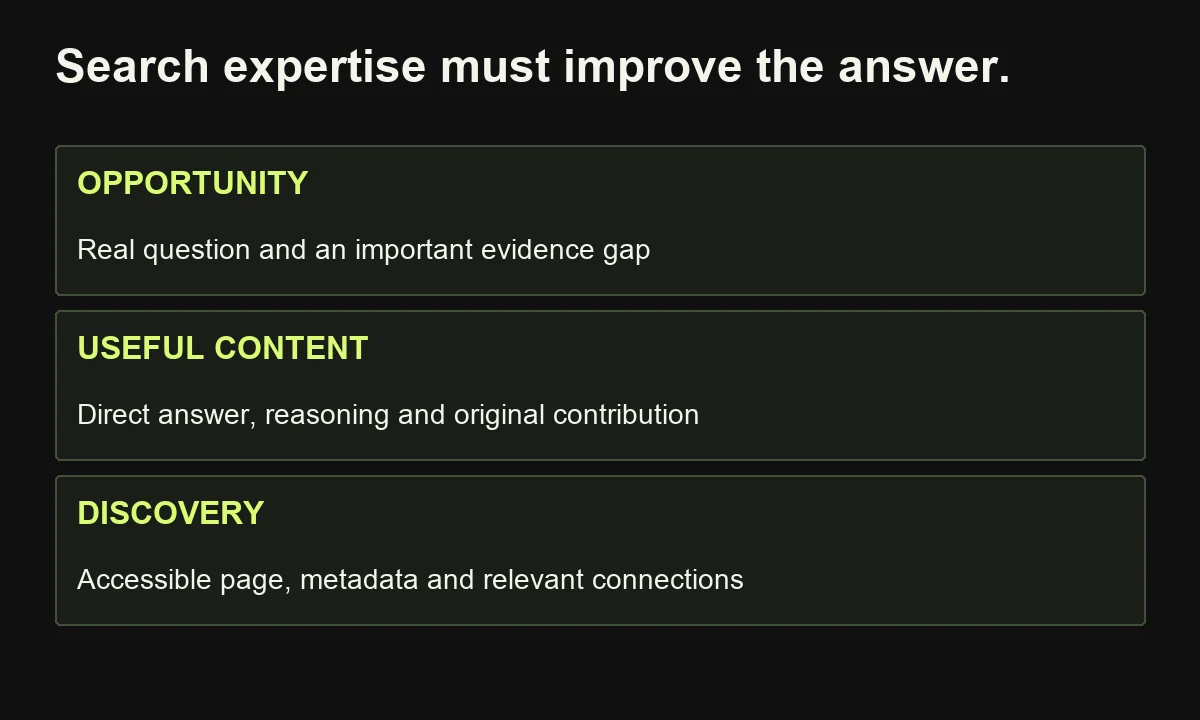
A credible content partner connects search demand and buyer questions to useful, original answers, then supports discovery with sound technical foundations. For answer and generative engines, claims should remain clear when extracted and retain their evidence and qualifications. Metadata, headings, and schema help describe the content; they cannot guarantee rankings, citations, or commercially useful enquiries.
Ask candidates to show how they choose a query, inspect competing answers, identify missing evidence, and determine whether a new page is needed.
A keyword list alone does not demonstrate a strategy. Neither does a promise to rank through a fixed number of articles, backlinks, or AI-generated drafts.
Google's people-first guidance emphasizes usefulness, original contributions, clear sourcing, and appropriate expertise. Its generative AI search guidance connects AI visibility to the wider search foundations rather than special markup guarantees.
Request a concrete example: a question-led outline, a supported opening answer, relevant internal links, and a diagram that explains a decision. Ask who checks claims before publication and who verifies that the page is accessible and indexable.
AI can assist research organization and drafting, but someone must own the judgment. The relevant comparison is the quality of accepted work and its evidence, not whether the partner advertises AI capabilities.
My blog-ranking guide explains the broader process. Search visibility should serve the intended audience and offer, rather than become a separate production target disconnected from them.
How do you compare agency and freelancer costs fairly?
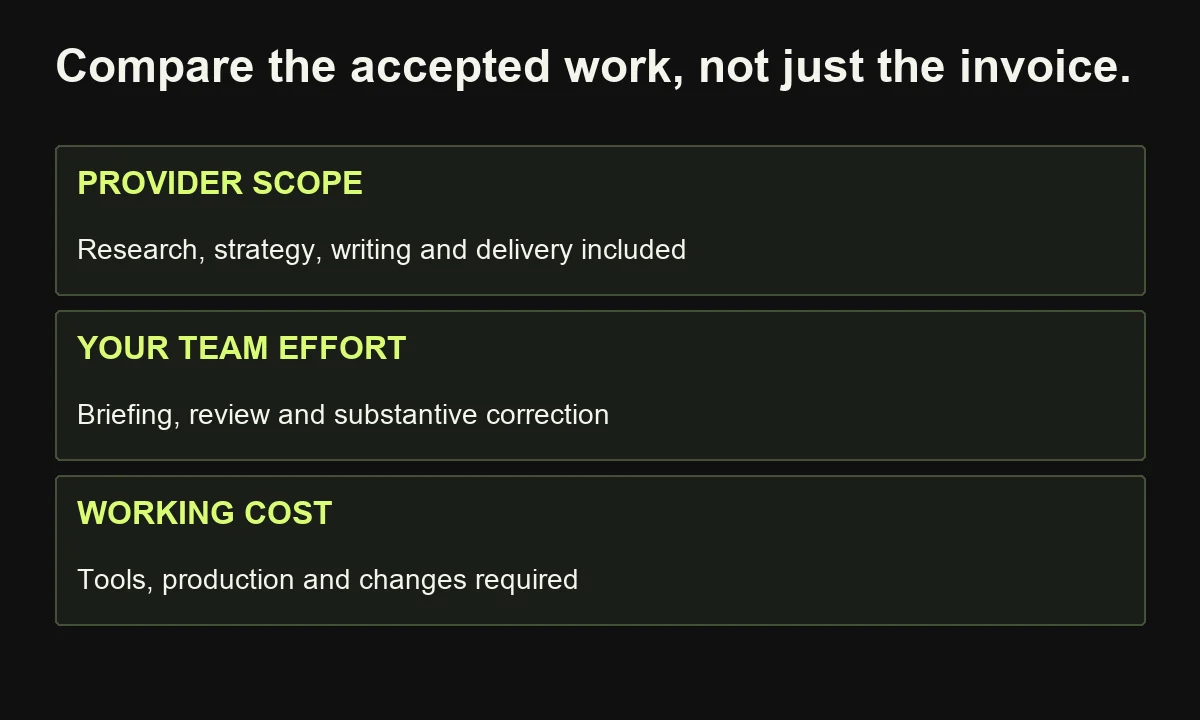
Compare the cost of an accepted, useful body of work, including your team's effort. Match the scope before comparing fees: research, strategy, writing, design, revisions, publishing, and reporting may be included differently. A freelancer is not automatically cheaper, and agency coordination is not automatically waste. The question is whether you need and receive the work being priced.
Use a practical cost view:
Total engagement cost = provider fees + tools and production expenses + internal briefing, review, and correction effort.
Avoid counting the same effort twice. Use consistent staff-time assumptions if you assign an internal cost.
Request separate explanations for discovery, ongoing production, specialist support, and changes outside the agreed scope. Clarify dependencies and what happens when your team cannot provide a source or approve a draft on time.
Per-word rates can compare a narrow writing task. They are a weak basis for comparing research-led strategy with routine production.
Likewise, a retainer needs an operating explanation: what responsibility is maintained, what outputs are expected, and how priorities change. A list of deliverables does not establish continuous strategic ownership.
For a lean B2B team, a direct strategy-and-writing engagement may be economical when it removes unnecessary coordination and keeps the argument with the person producing it. Verify that benefit in the actual working arrangement.
What should a paid content pilot prove?
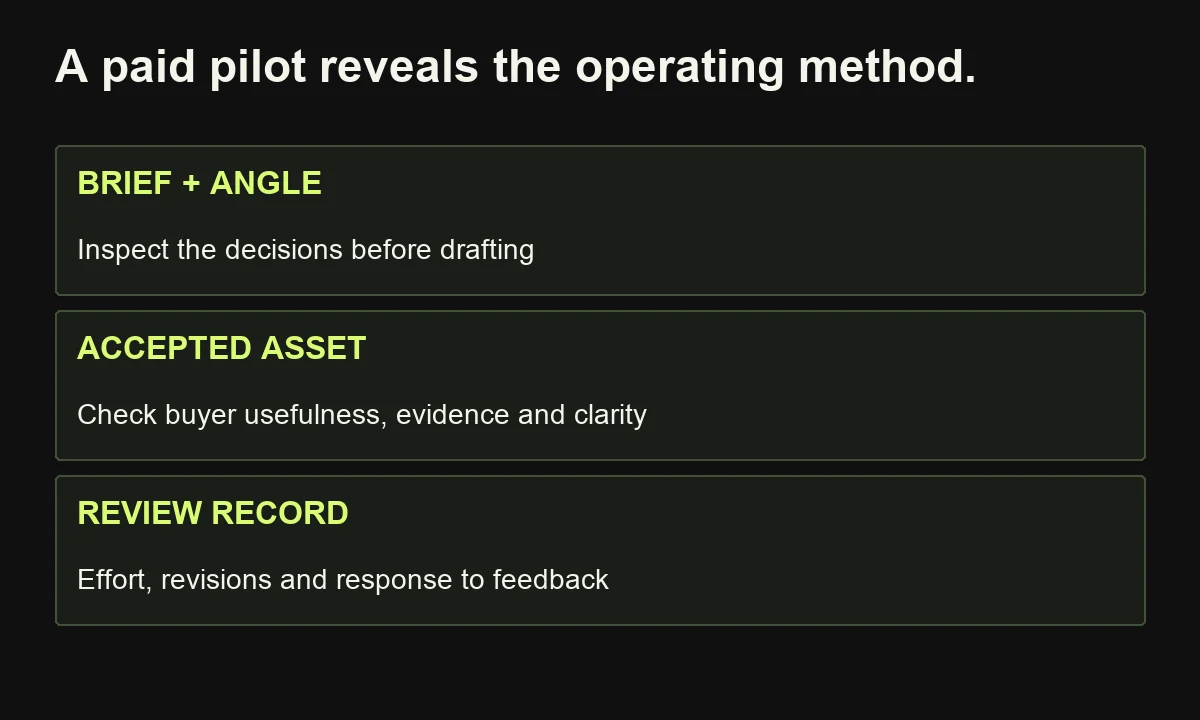
A paid pilot should show how the proposed partner learns, decides, writes, and responds to review on representative work. Define the assignment, source access, deliverables, and acceptance criteria before it begins. Its purpose is to test the working relationship and quality standard, not promise that one article will prove sustained revenue or search performance.
Choose a commercially relevant assignment with enough evidence to assess the process. For example, ask the partner to explain when a buyer should choose a strategy audit instead of additional writing capacity.
Request a brief and proposed angle before the draft. That reveals the strategic decisions while there is still time to challenge them.
Then inspect the accepted output against five questions:
- Does it support the intended buyer decision?
- Are important claims traceable and appropriately qualified?
- Does the argument offer useful judgment beyond general advice?
- Can another stakeholder understand it without additional explanation?
- Is the next action relevant and proportionate?
Record your own effort, substantive revisions, missing inputs, and how feedback changes the work. Distinguish factual correction from a changed brief; otherwise, you may misdiagnose the reason for revision.
Use the same representative assignment when comparing delivery models. Avoid unpaid speculative work disguised as a test.
A successful pilot should leave you with a usable asset, a clearer standard, and evidence about the person's operating method. Those are stronger reasons to continue than an impressive proposal or a promise of effortless content growth.
How should you measure and maintain the engagement?
Measure the engagement first through accepted quality, clear ownership, and a process your team can operate. Then assess visibility, relevant engagement, sales feedback, and qualified enquiries against the content's purpose. Agree the observation period and record other changes. A rise in traffic or attributed conversions alone does not establish incremental financial value from the partner.
For each important asset, define the reader's task and a useful observation. An explanation might support relevant onward reading. A service page might improve the completeness of suitable enquiries. Sales feedback can reveal which questions remain unanswered.
Review actual counts alongside rates, especially when traffic is limited. Do not call a small result conclusive or turn one case study into a universal benchmark.
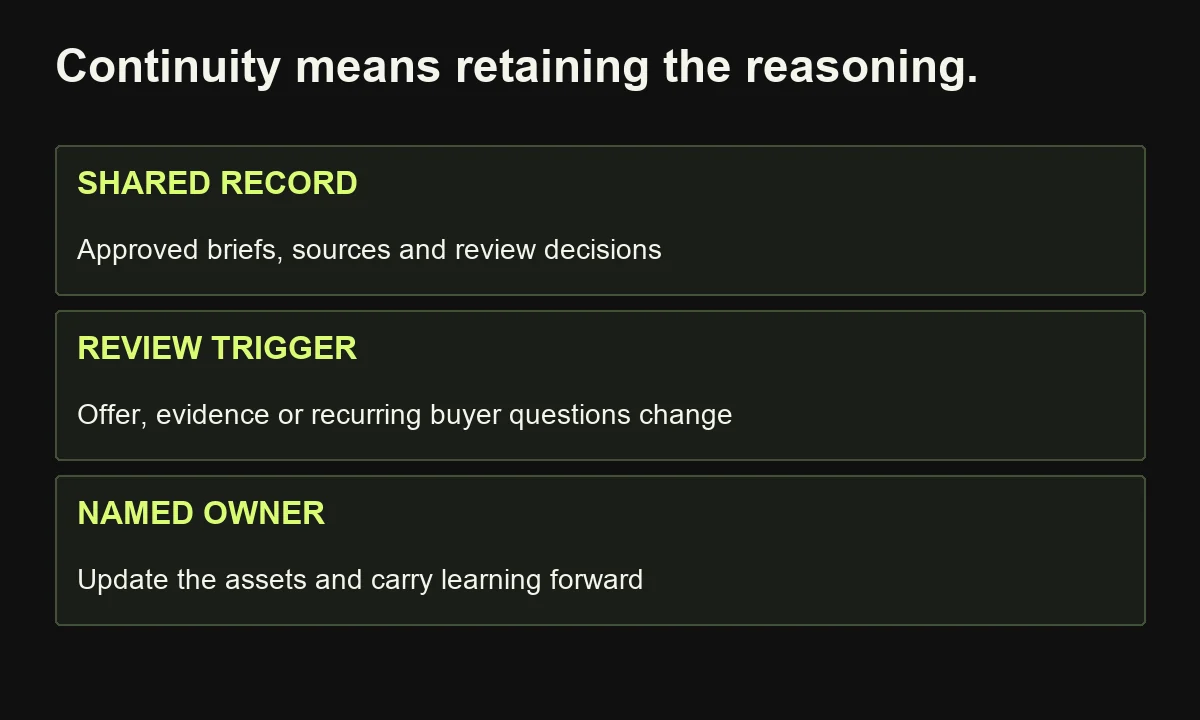
Keep the underlying work accessible: approved briefs, source references, content plans, editable drafts, and review decisions. Clarify access, permitted use, exports, and handover expectations in the written scope.
Agree who updates the content when the offer or evidence changes. Continuity is not simply receiving another batch next month; it is retaining the reasoning that makes the next batch coherent.
Use the content-partner decision worksheet to compare ownership, research, quality, operating effort, and unresolved gaps. It is an editorial checklist, not a predictive score.
Renew when the partner provides useful decisions and accepted work under a maintainable arrangement. If recurring friction remains, diagnose whether it comes from capability, unclear inputs, capacity, or mismatched expectations before expanding the commitment.
Frequently asked questions about hiring a B2B content marketing agency
Is a freelancer better than a B2B content marketing agency?
A senior freelancer may be the better fit for direct research, strategy, and writing ownership. An agency may fit broader coordinated production. Compare the named people and operating model; neither category guarantees expertise, attention, or results.
Can a freelancer handle strategy as well as writing?
Yes, when that is their demonstrated capability and agreed scope. Ask how they research buyers, choose priorities, develop briefs, and turn recommendations into accepted content. A person selling only article production may offer a different service.
Will outsourcing remove the need for internal involvement?
No. Your business still supplies approved facts, appropriate source access, commercial decisions, and timely review. A strong partner can organize and challenge the process, but cannot responsibly invent the missing evidence or decide every business question independently.
What should I send before discussing an engagement?
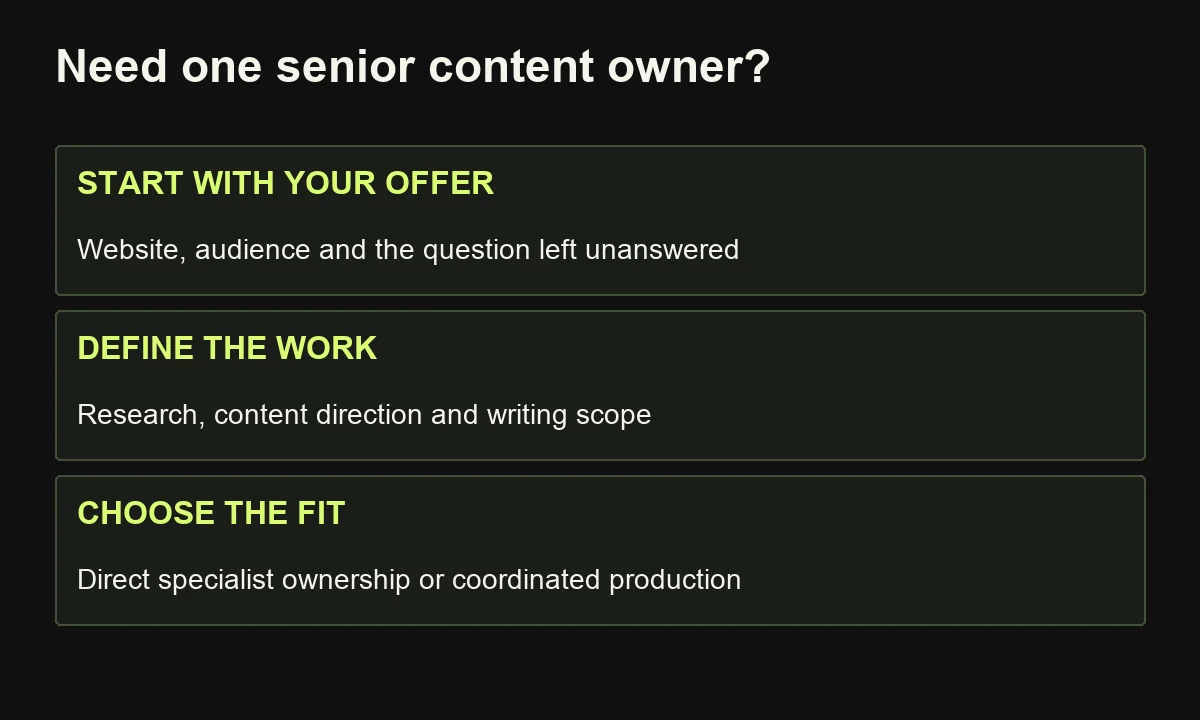
Send your website, offer, intended audience, and the question your current content is failing to answer. Share a representative page and explain who reviews it. Describe sensitive information initially rather than sending confidential records or credentials.
You may need a senior content owner before you need a bigger production structure. If you want to work directly with me on buyer research, content direction, and writing, share your website and the decision your buyers need help making. We can discuss a sensible scope and whether direct specialist ownership fits the work.