
AI summary
Choose an operating pattern from the task, rather than a vendor label. Stable handoffs often need predictable rules, while investigative work may benefit from an agent that can adapt its steps. Added autonomy should improve a defined and reviewable outcome.
- Inspect the actual behavior: Ask which steps are fixed, which tools the system selects and what happens when information is missing. An AI-generated paragraph inside a workflow does not establish control over an entire marketing process.
- Pilot a bounded deliverable: Start with an evidence-backed account brief using approved public sources. Separate verified facts from inferences, permit empty fields and review realistic failures before connecting the system to consequential actions.
- Count the reviewed result: Include supervision, corrections, usage, setup and maintenance alongside generation time. Compare quality on representative cases, demonstrate recovery and expand permissions only when a documented limitation justifies the additional access.
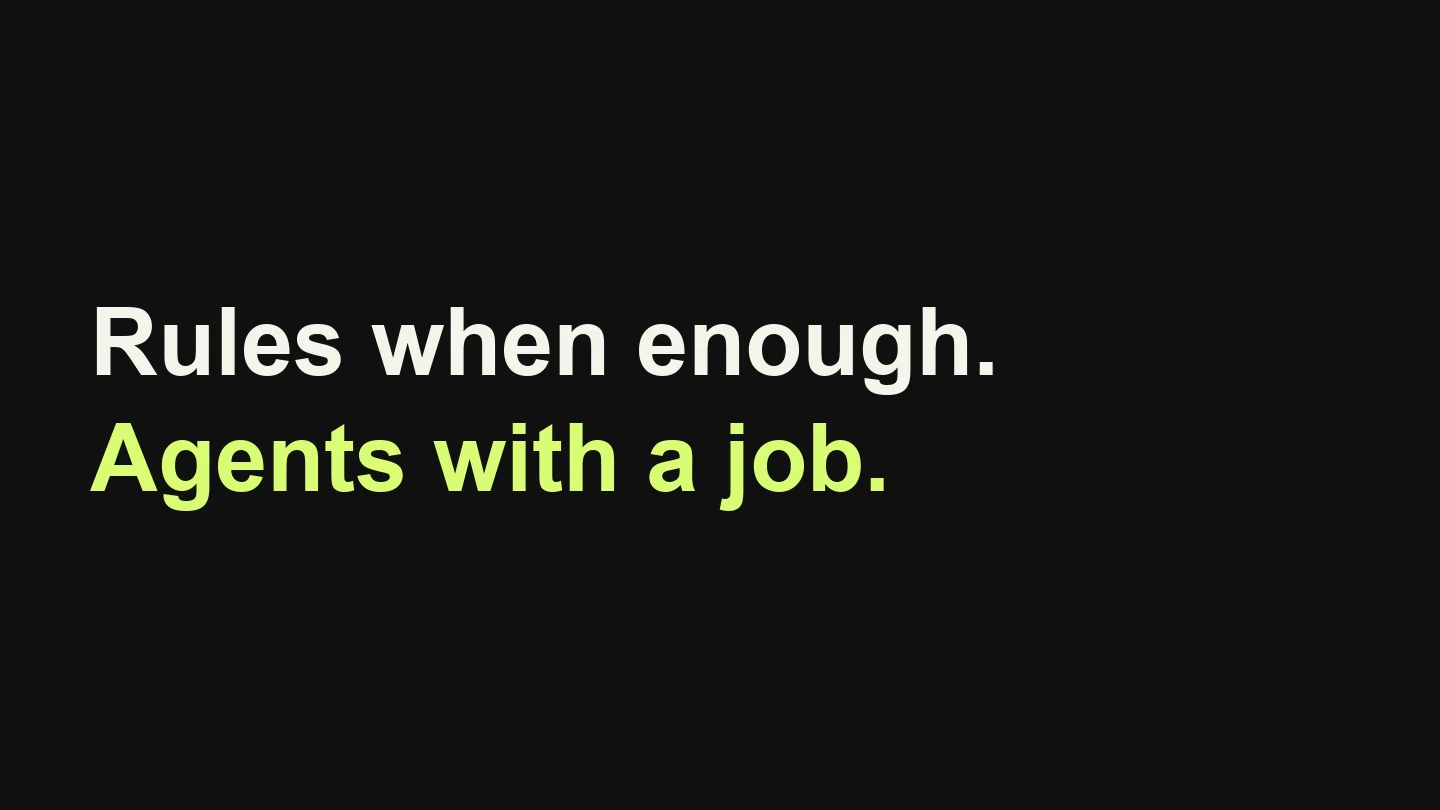
Marketing automation follows a designed process; an AI marketing agent can choose steps and tools while pursuing a defined goal. Use predictable automation for stable handoffs and consider an agent when the work requires investigation or adaptation. Evaluate the actual behavior, permissions and failure handling rather than the label on the product page.
Anthropic's architectural explanation distinguishes predefined workflows from agents that dynamically direct their own processes and tool use. It also recommends starting with the simplest solution that meets the task. The article dates from 2024; the distinction is useful here without treating its tooling examples as current product advice.
An agent should earn its added complexity by improving a defined outcome. “More autonomous” is not an outcome. A usable research brief, fewer unsupported claims or a faster reviewed handoff can be evaluated more concretely.
Separate rules, assistance and agent behavior
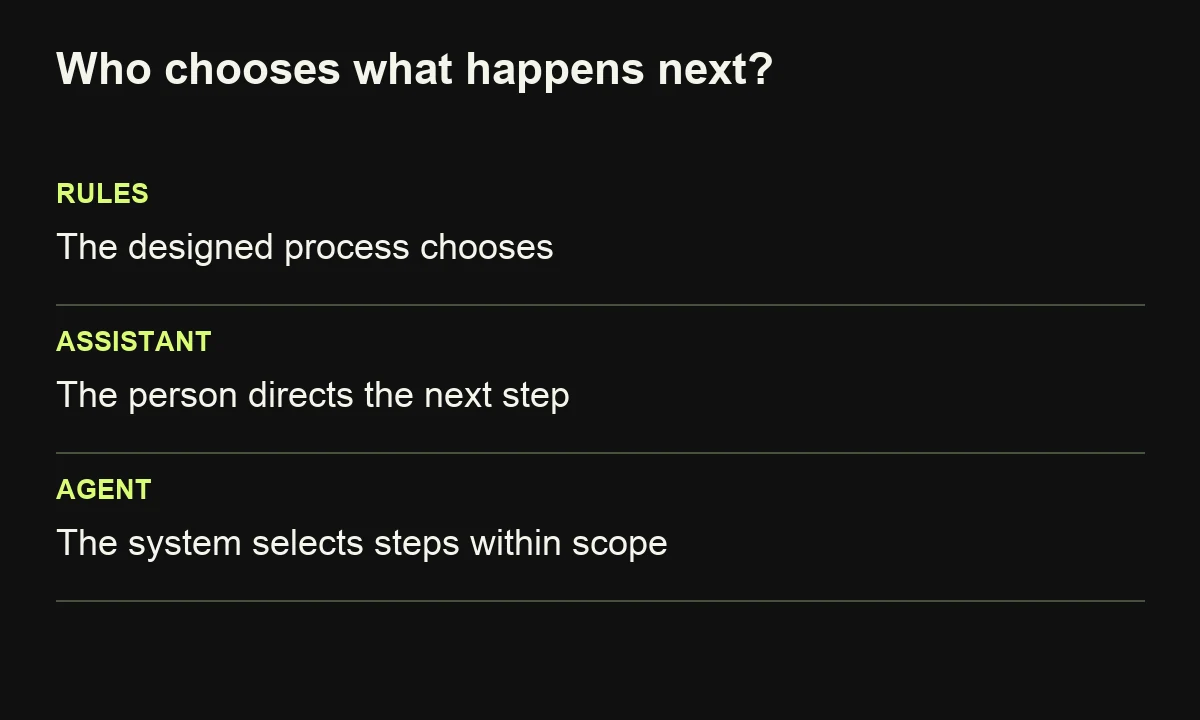
A rules-based workflow executes the path the team has designed. For example, a validated form submission creates a record and assigns an owner according to territory. The team can document the expected route and specify exceptions in advance.
An AI assistant helps someone perform a task, such as rewriting a supplied paragraph. The person typically decides what comes next. An agent has more control over the process: it may select sources, call tools and adapt its sequence based on what it finds.
Ask a supplier to demonstrate the boundaries:
- What goal does the system receive?
- Which steps are fixed, and which can it choose?
- What information and tools can it access?
- Which actions can it take without review?
- What causes it to stop, retry or ask for help?
Use one realistic input and one deliberately incomplete input during the demonstration. A polished success path can conceal how the system handles missing evidence. The answer should include an observable result and a recoverable failure, rather than an assurance that the model will simply work it out.
Choose the operating pattern from the task
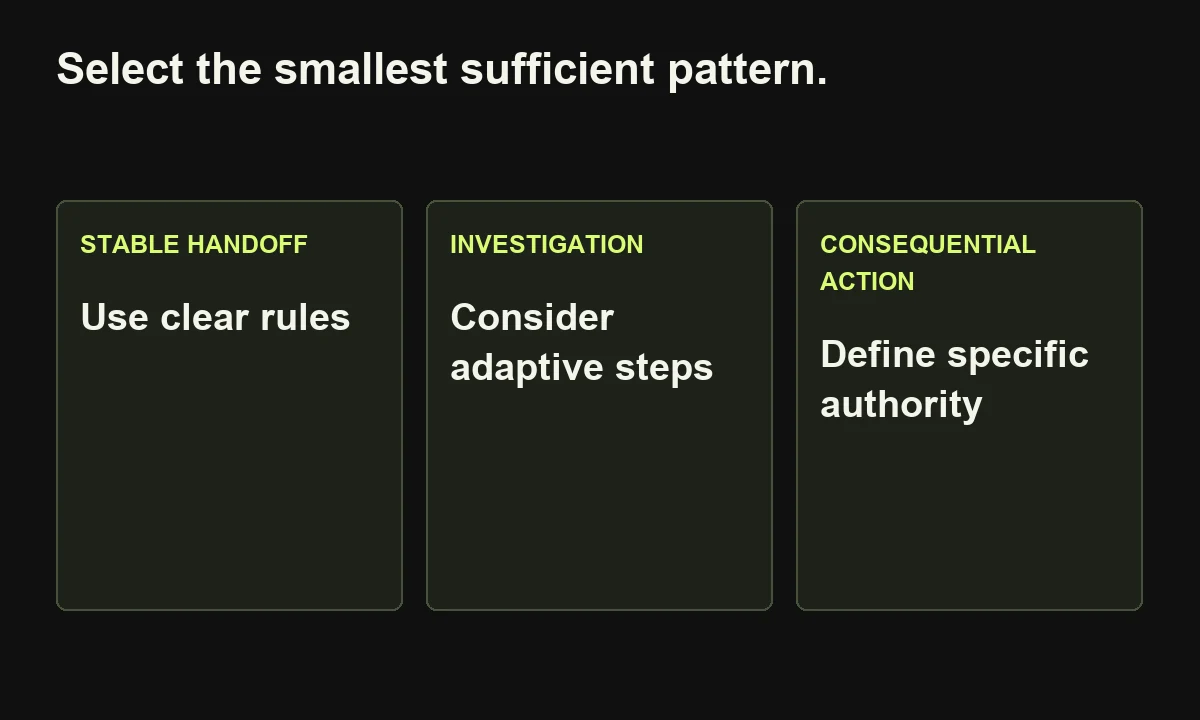
Keep deterministic work deterministic when that is sufficient. Sending an approved reminder after a known event usually needs reliable rules, accurate data and exception handling. Model-directed investigation may add cost without improving that handoff.
Consider an agent when the next useful action depends on information discovered during the task. Researching a company's public positioning can require following relevant sources, resolving conflicting descriptions and deciding when evidence is insufficient. A fixed list of URLs may not cover every case.
Even there, define the boundary. “Prepare an evidence-backed account brief” is a narrower goal than “grow our pipeline.” The first can have explicit source requirements, output fields and review criteria. The second hides many decisions about audience, messaging, spend and contact permissions.
For marketing teams starting from a fragmented process, the workflow guide helps identify the handoffs before selecting software. An agent connected to a confused process can generate more activity while leaving the same unresolved ownership problem. Clarifying the work is therefore part of the implementation, rather than a preliminary exercise to skip.
Design a bounded research pilot
Consider a fictional B2B consultancy preparing account briefs for its strategists. The pilot's task is to summarize a prospect's public offer, identify documented audience signals and propose questions for a conversation. It does not send outreach or update the CRM automatically.
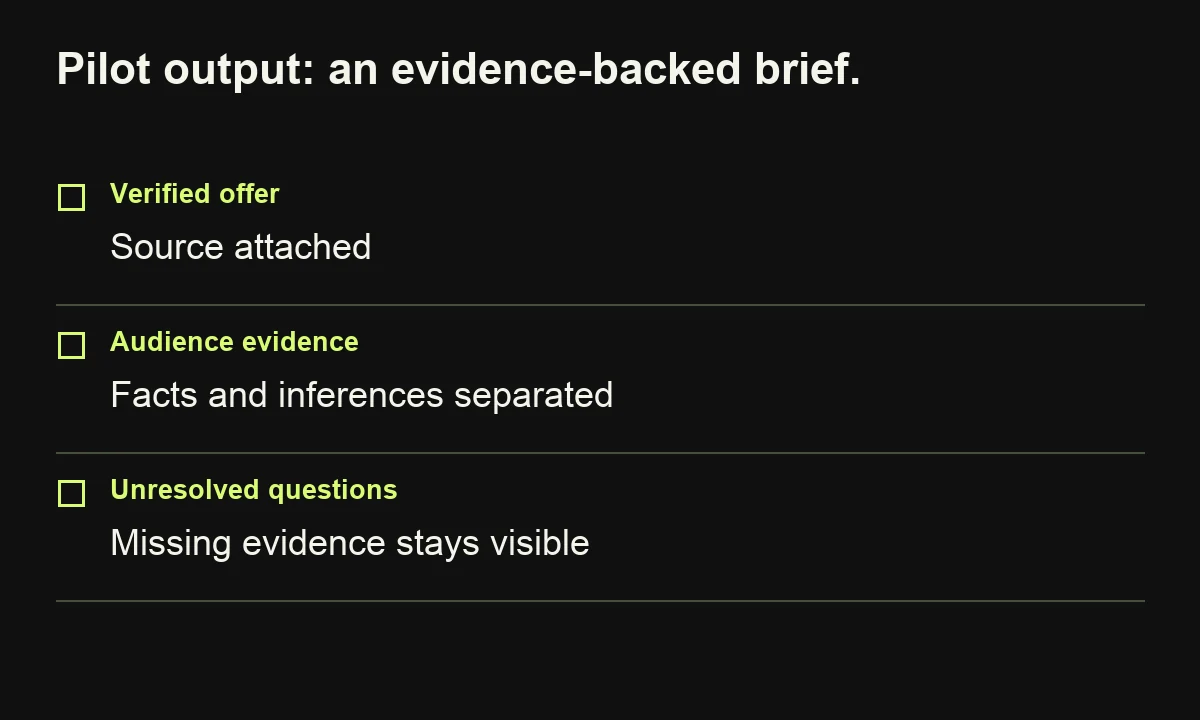
Inputs are a company URL, a supplied scope and approved public-source types. The agent can inspect relevant pages and return to a source when two descriptions conflict. It must attach a URL to each factual statement and label inferences separately.
The output contains five fields: verified offer, audience evidence, recent relevant change if supported, unresolved questions and sources checked. An empty “recent change” field is acceptable when no credible evidence exists. Filling every field is less important than preserving accuracy.
The strategist reviews the brief against the opened sources. Missing or inaccessible evidence becomes an unresolved item rather than a plausible-sounding replacement. The pilot log records source failures and any unsupported assertion the reviewer removes.
This is a proposed operating design, not a reported client implementation. Its value is that the team can inspect a concrete artifact and compare it with its current manual brief. Only after that comparison should it decide whether wider access or another automated handoff would solve a demonstrated problem.
Set permissions around specific actions
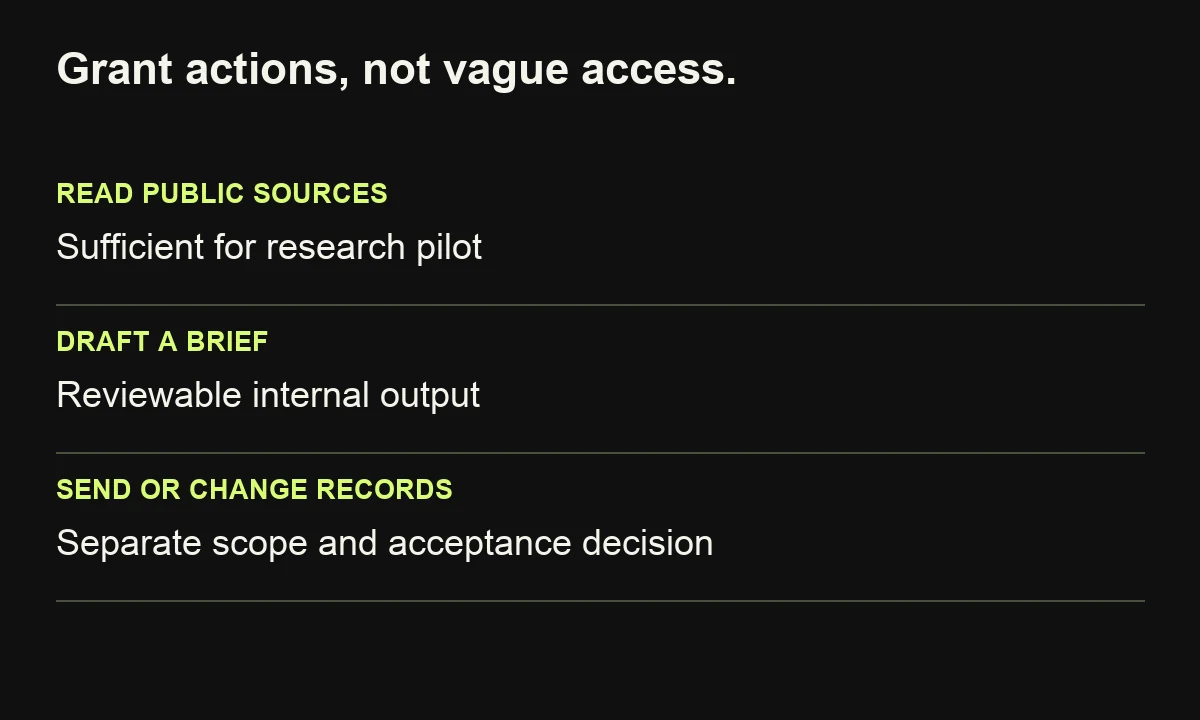
List each available action rather than granting an abstract “marketing access” permission. Reading a public page, drafting a message, editing a customer record, sending an email and changing a campaign budget have different consequences and recovery options.
For the research pilot, read access and a draft output folder are sufficient. There is no task-related reason to provide sending permissions. If the next phase proposes CRM updates, define the permitted fields, validation rules and reversal process before enabling writes.
Treat external pages and retrieved documents as evidence. They may contain instructions, but those instructions should not authorize the system to change its task, reveal information or perform unrelated actions. Include this boundary in the implementation review and test it with controlled examples.
Keep a way to disable the workflow and preserve the previous state where applicable. Recovery should be demonstrated during the pilot. A promise that the vendor can investigate later is less useful than a clear account of who stops the process and how the team resumes its work safely.
Compare total reviewed work, not generation speed
Measure from usable input to accepted output. Include research, model or platform costs, review, corrections, failed runs and maintenance. A brief produced in thirty seconds may still require a lengthy source check.
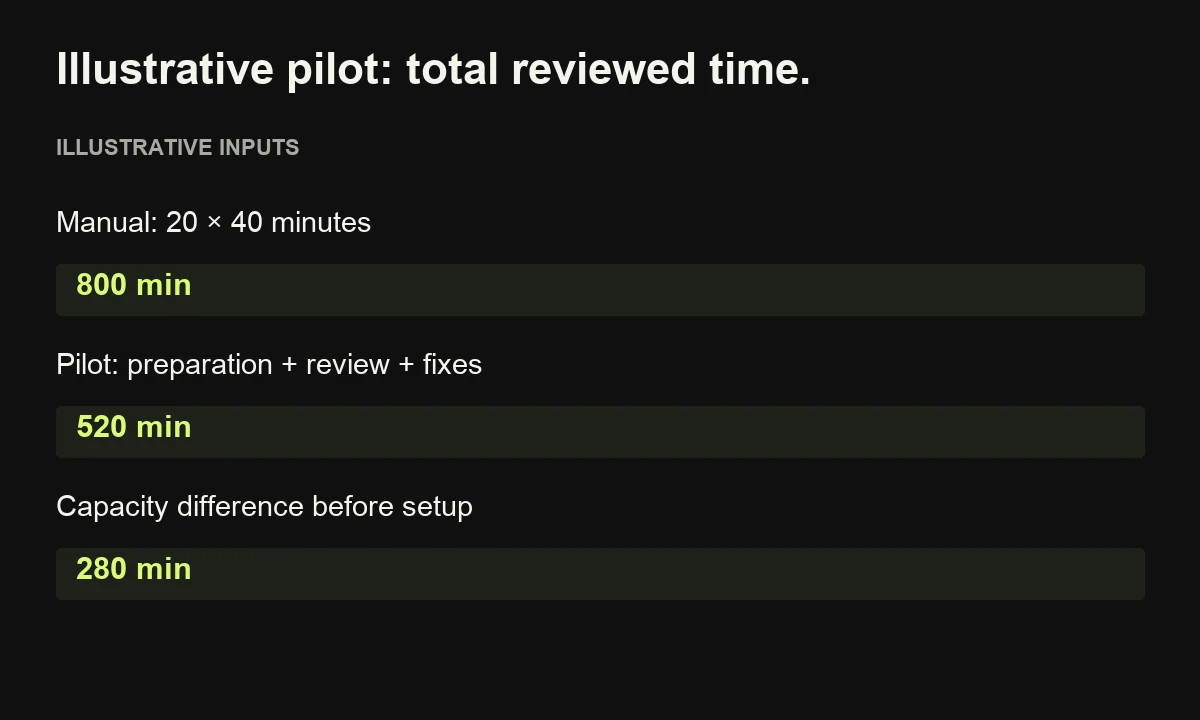
Use a transparent illustration. Suppose twenty manual briefs take forty minutes each: 800 minutes in total. In a pilot, preparation and run supervision take 100 minutes, review takes 300 and corrections take 120. The pilot uses 520 minutes, a reduction of 280 minutes for that sample.
At an assumed internal labor value of ₹1,000 per hour, 280 minutes represents about ₹4,667 of capacity. Subtract ₹2,000 in illustrative software and usage costs to obtain about ₹2,667 before setup and maintenance. These are assumed inputs, not market pricing or promised savings. Capacity becomes cash savings only under additional business conditions.
Evaluate quality alongside time. Track factual errors, unsupported inferences, missing important information and briefs rejected by reviewers. Do not accept a faster process if it produces a material decline in decision quality.
Repeat the comparison on representative difficult cases, including inaccessible pages and conflicting sources. A pilot selected only from easy examples cannot establish performance across the real workload. The automation cost guide explains the broader budget components to consider before expanding the system.
Questions to resolve before expanding
Will an agent replace the automation platform?
Not necessarily. An agent can perform an investigative step while an existing platform handles records, permissions and stable delivery rules. Decide which system owns each action and source of truth. Avoid creating two independent processes that can contact the same prospect.
Does the system learn automatically from every run?
Do not assume that. Ask what persists, what changes after feedback and who approves those changes. A revised prompt, stored memory and a model update are different mechanisms. Each can affect later behavior and needs an understandable owner.
When is the pilot ready for wider use?
When its output meets the agreed quality standard, costs are understood, failures have owners and recovery works. Define those acceptance conditions before the trial. A convincing demonstration is useful evidence, but it is not the same as a representative operational test.
If your team is evaluating agents but the work itself remains unclear, share one recurring marketing task. Mapping its inputs, decisions and acceptance criteria is a practical first step toward a system worth operating.